When Snow and Ice Turn Highways Into Evidence for Your Truck Accident Claim
Winter weather creates treacherous driving conditions that significantly increase the risk of truck accidents in Centennial, Colorado. If you’ve been injured in a truck accident during snow, ice, or freezing conditions, the weather itself can become powerful evidence in your case. The Federal Highway Administration reports that over 1,300 people are killed and more than 116,800 people are injured annually in traffic accidents on snowy, slushy, or icy pavement, and commercial trucks pose particular dangers due to their size and stopping distances. Understanding how winter conditions affect liability and evidence can help you build a stronger case for the compensation you deserve.
💡 Pro Tip: Document weather conditions immediately after your accident by saving screenshots of local weather reports and taking photos of road conditions – this evidence can disappear quickly as conditions change.
If winter’s icy grip has turned your truck accident case from a fender-bender into a legal mountain, Jacobs Law is here to cut through the storm. Let us help you navigate the legal frosts with precision and care. Ready to take the next step? Give us a call at 303-529-4040 or contact us today.

Colorado’s Winter Driving Laws Create Legal Obligations for Truck Drivers
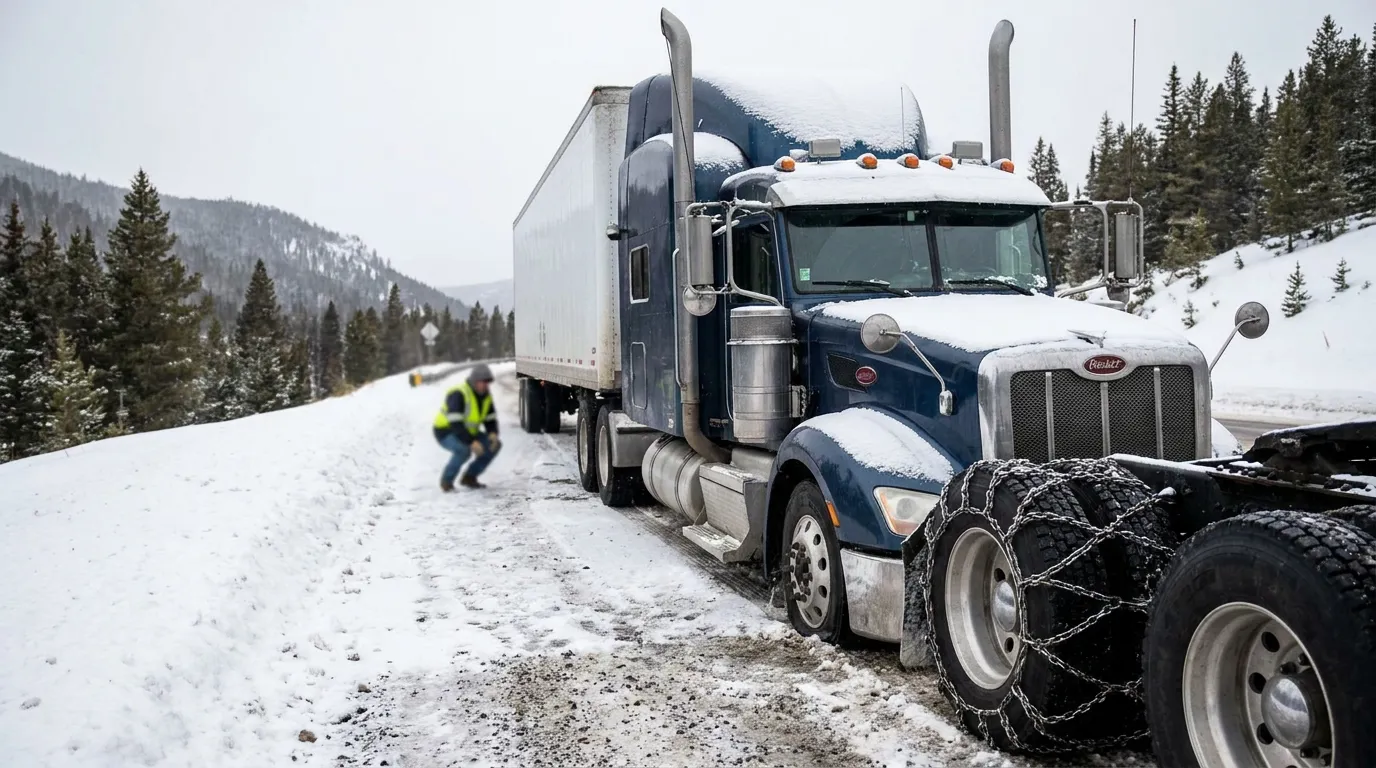
Colorado law imposes specific requirements on commercial truck drivers during winter conditions that can strengthen your accident claim. As of August 7, 2024, all commercial motor vehicle drivers must carry chains from September 1 to May 31, and drivers of commercial vehicles with four or more drive wheels must affix tire chains to at least four drive-wheel tires when chain requirements are activated. When truck drivers fail to meet these legal obligations, they may be held liable for accidents that result from their non-compliance. Additionally, House Bill 19-1207 gives the Colorado Department of Transportation authority to restrict travel during icy or snow-packed conditions unless vehicles are equipped with proper traction devices, creating another layer of legal responsibility for commercial drivers.
💡 Pro Tip: Request the truck driver’s inspection logs and maintenance records – failure to carry required chains or maintain proper winter equipment can establish negligence even if chains weren’t required at the time of your accident.
Building Your Winter Weather Truck Accident Case Step by Step
The timeline for pursuing a winter weather truck accident claim in Centennial requires immediate action to preserve crucial evidence. Weather conditions change rapidly, and documentation from the National Weather Service and Colorado State Patrol becomes essential to establishing the conditions at the time of your accident. Your case timeline begins the moment the accident occurs, and each step you take can impact the strength of your claim. Understanding this process helps you protect your rights while recovering from your injuries.
- Immediately document weather conditions through photos, videos, and official weather reports from the National Weather Service
- Obtain the police report, which should note road conditions and any chain law violations
- Secure witness statements about weather and driving conditions at the accident scene
- Request preservation of the truck’s electronic logging device (ELD) data and dash cam footage
- File your claim within Colorado’s statute of limitations while memories and evidence remain fresh
How Jacobs Law Leverages Winter Weather Evidence to Maximize Your Compensation
Successfully resolving a winter weather truck accident case requires understanding how weather conditions interact with commercial driving regulations and liability principles. When you work with a truck accident lawyer in Denver like Jacobs Law, they can demonstrate how winter conditions amplified the truck driver’s duty of care and how violations of Colorado’s chain laws or federal safety regulations contributed to your accident. The firm’s extensive experience with Colorado truck accident laws means they understand how to use weather data, chain law violations, and federal motor carrier safety regulations to build compelling cases that insurance companies cannot ignore.
💡 Pro Tip: Keep a detailed journal of how weather conditions affected the accident and your injuries – insurance companies often try to shift blame to weather rather than driver negligence, but your account can show how the driver failed to adjust for conditions.
Federal Safety Standards and Winter Weather Create Higher Duties for Truck Drivers
The National Highway Traffic Safety Administration (NHTSA) provides specific guidance for winter driving that creates recognized safety standards applicable to all drivers, including commercial truck operators in Centennial. NHTSA warns that snow, sleet, and ice create extremely dangerous road conditions and advises drivers to slow down and increase following distances because stopping and control become significantly harder on slick surfaces. These nationally recognized principles become especially important in truck accident cases because commercial drivers receive professional training on these hazards.
Emergency Supplies and Reasonable Precautions
NHTSA’s consumer guidance recommends that drivers prepare their vehicles and carry emergency supplies such as shovels, ice scrapers, sand or kitty litter, jumper cables, first-aid kits, and blankets. For commercial truck drivers operating in Colorado’s winter conditions, failure to carry such equipment can demonstrate a lack of reasonable precautions. This preparation standard becomes relevant when evaluating whether a truck driver took appropriate steps to handle foreseeable winter emergencies, potentially strengthening your claim if the driver was unprepared for conditions they should have anticipated.
💡 Pro Tip: Ask your attorney to investigate whether the truck carried required winter safety equipment – a driver stranded without basic supplies may have violated both federal guidelines and company safety policies.
Understanding Hours of Service Waivers and Their Impact on Winter Accident Claims
The Federal Motor Carrier Safety Administration (FMCSA) sometimes issues emergency declarations that provide temporary hours-of-service relief during severe weather events. For example, FMCSA extended a Regional Emergency Declaration effective February 3 through February 20, 2026, which included Colorado among affected states. While these waivers allow drivers providing direct emergency assistance to exceed normal driving hours, they can complicate accident claims by potentially increasing driver fatigue while simultaneously providing a defense for hours-of-service violations.
When Emergency Waivers Don’t Protect Negligent Drivers
It’s crucial to understand that FMCSR emergency waivers apply only to direct emergency relief efforts – all other safety requirements remain in effect. If a truck driver claims protection under an emergency waiver but was not actually providing emergency assistance, or if they violated other safety regulations despite the waiver, they remain fully liable for accidents caused by their negligence. A skilled Centennial Colorado truck accident attorney can investigate whether claimed emergency operations were legitimate and whether the driver still failed to meet applicable safety standards.
Frequently Asked Questions
Winter Weather and Truck Accident Liability
Many accident victims wonder how winter weather affects their ability to recover compensation after a truck crash. Understanding these common concerns helps you make informed decisions about your case.
💡 Pro Tip: Don’t assume bad weather automatically means no one is at fault – commercial drivers have heightened responsibilities to operate safely in all conditions they choose to drive in.
Next Steps After a Winter Truck Accident
Taking the right steps after a weather-related truck accident can significantly impact your case outcome and your path to recovery.
1. Can I still win my case if the truck driver blames icy roads for our Centennial truck accident?
Yes, winter weather does not automatically absolve truck drivers of liability. Commercial drivers must adjust their driving to match conditions, and Colorado law requires them to carry proper equipment from September through May. If the driver failed to slow down, increase following distance, or use required chains, they can be held liable despite icy conditions.
2. How do Colorado’s chain laws affect my truck accident lawsuit in the Denver metro area?
Colorado’s chain laws create specific legal duties for commercial truck drivers. Violations of these requirements – such as failing to carry chains between September 1 and May 31 or not installing them when required – can establish negligence per se, meaning the driver automatically breached their duty of care by violating the law.
3. What weather-related evidence should I gather for my winter truck crash claim?
Collect National Weather Service reports, Colorado State Patrol chain law enforcement records, photos of road conditions, and witness statements about weather conditions. Also document whether the truck had proper winter equipment and whether the driver was following emergency weather protocols required by their company.
4. How long do I have to file a weather-related truck accident lawsuit in Colorado?
Colorado’s statute of limitations for personal injury claims generally provides two years from the accident date, with an exception for motor vehicle accidents which have a three-year statute of limitations. However, evidence of weather conditions can disappear quickly, so you should begin documenting and preserving evidence immediately, even if you’re still receiving medical treatment.
5. Should I hire a Centennial Colorado personal injury attorney if weather was involved in my truck accident?
Weather-related truck accidents often involve complex liability issues and multiple regulations. An attorney with experience in Colorado commercial vehicle accidents can investigate whether the driver violated chain laws, federal safety standards, or company policies while using weather data to strengthen rather than weaken your case.
Work with a Trusted Truck Accident Lawyer
Winter weather truck accidents require legal representation that understands both Colorado’s specific winter driving laws and federal commercial vehicle regulations. The intersection of weather conditions, chain law requirements, and commercial driving standards creates unique opportunities to build strong cases for injured victims. When you work with a truck crash legal representation team that knows how to investigate weather-related factors, preserve critical evidence, and counter insurance company tactics that blame weather instead of driver negligence, you position yourself for the best possible outcome. The right truck accident lawyer in Centennial Colorado will use weather evidence to strengthen, not weaken, your claim for compensation.
When winter’s icy roads lead to a truck accident, don’t wait to seek the help you need. Jacobs Law is ready to navigate these slippery legal paths with you. Reach out at 303-529-4040 or contact us today.