Being in a car accident can be overwhelming, but knowing what to do next can protect your health, rights, and future claim. A car accident lawyer in the Denver area can help with the legal side later. These are the first moves that keep you safe and protect your case:
- Check for Injuries: Assess yourself and others for any injuries and seek medical assistance.
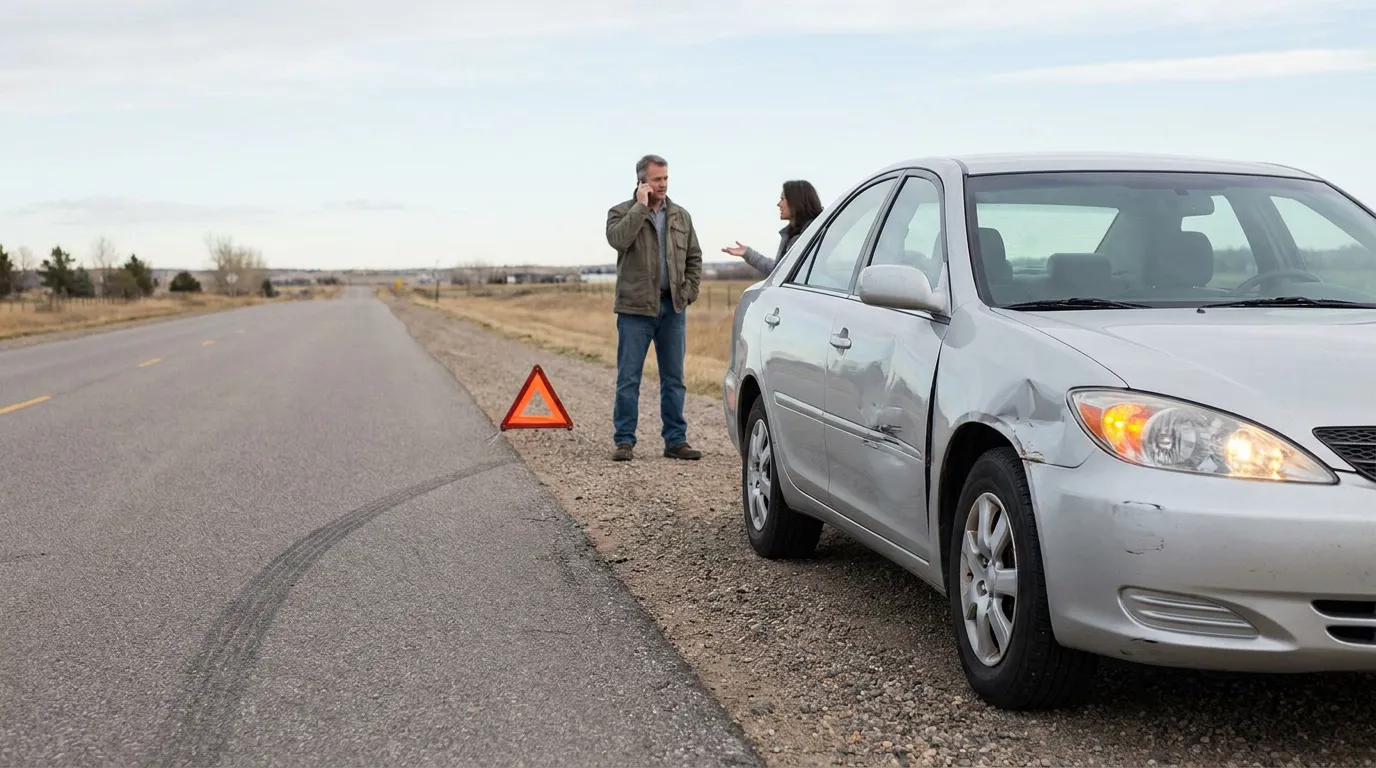
- Move to Safety: Try to move the vehicles to a safe location and turn on the hazard lights.
- Call the Police: Report the accident to the police and obtain a copy of the police report.
- Exchange Information: Share contact, insurance, and vehicle details with the parties involved.
After that, document the scene, see a doctor and notify your insurer, as the sections below explain.
Check for Injuries and Call 911
Start by making sure anyone hurt gets care, and call 911 if the injuries look serious. Check yourself, then your passengers, then anyone in the other vehicles. Tell the dispatcher where you are and how many people are hurt.
Get Yourself and Others to Safety
If the cars still run and no one is badly hurt, steer them out of the travel lanes and switch on your hazard lights. If a car cannot be moved safely, leave it, and wait well away from passing traffic.
Stay at the scene until officers arrive or tell you that you can go. The state rules on stopping and staying are covered further down this page.
Report the Crash to the Police
Call the police even when the damage looks minor. Emergency responders will document the scene and generate a police report, which becomes critical evidence.
If law enforcement responds, you generally won’t need to submit additional forms unless the Department of Revenue contacts you. If no officer comes to the scene, you may be able to report the crash online yourself.
Pro Tip: During severe weather or “accident alert” conditions in Centennial, law enforcement response may be limited. In these situations, exchange information with all involved parties and promptly file an online report to preserve records for insurance purposes.
Which office keeps your report depends on where the crash happened, as our guide on who investigates car accidents in Centennial explains.
Document the Scene
The most useful evidence comes from a combination of sources rather than a single photo or statement. In Colorado car accident claims, evidence commonly used to determine fault includes police reports, photos of vehicle damage, driver and witness statements, traffic laws and road conditions, and medical records.
When you are physically able and it is safe, focus on collecting:
- Wide and close-up car crash photos showing vehicle positions, damage, debris, and skid marks
- Contact information for witnesses who saw the collision
- Photos of traffic signals, road signs, weather conditions, and lane markings
- The responding officer’s name and report or case number
For a deeper look at the proof attorneys rely on, our guide on the evidence used in car accident claims explains how each category fits together.
Pro Tip: Use your phone’s video function to narrate a slow walk around the scene. Speaking the date, time, and what you see captures details you might forget under stress.
Exchange Information, but Don’t Discuss Fault
Trade details with every driver involved before anyone leaves:
- Exchange names, phone numbers, addresses, and insurance details with all drivers.
- Record makes, models, colors, and license plates of all vehicles.
- Ask for the name of each driver’s insurer and the policy number.
Who caused the crash is a question for the investigation, not for a talk at the roadside. Apologizing at the scene, guessing about how the accident happened, or skipping medical care can all be used against you later. If the other driver will not share details, wait for the officer.
Our post on Colorado’s at-fault rules explains how blame is decided.
Get Medical Care, Even If You Feel Fine
Prompt medical evaluation protects both health and legal claims. Adrenaline can mask pain for hours or days. A medical professional can identify hidden injuries early and create documentation linking your condition to the crash.
Insurance companies look for treatment gaps to argue injuries are unrelated or less serious than claimed. Visiting an emergency room, urgent care, or your physician within 24 to 48 hours helps close that gap. Keep all medical records, receipts, and appointment notes organized from day one.
Pro Tip: Tell your doctor exactly how the accident happened and describe every symptom.
Should You See a Doctor If You Feel Fine?
Seek medical attention even without feeling injured. Delayed injuries like whiplash or internal trauma are common and may not present immediate symptoms.
What If Pain Shows Up Later?
Delayed symptoms are common with soft-tissue injuries, concussions, and spinal issues. Warning signs such as passing out, dizziness, numbness, or persistent headaches require emergency evaluation.
Pro Tip: Write down your symptoms each day in the weeks after the crash. See who pays your medical bills after a crash for the cost side of treatment.
Notify Your Insurance Company With Care
Tell your own insurer about the crash soon, sticking to short, plain facts. Most policies require timely notice; delay can jeopardize coverage.
Be prepared to provide your driver’s license, insurance policy information, the police report (once available), medical records related to accident injuries, and documentation of lost wages or damages.
Write down the claim number and the name of each adjuster you speak with.
Adjusters may request a recorded statement or push for a quick, lowball settlement before you understand the full extent of your injuries. Talk with a lawyer before you agree to a recorded statement with the other driver’s insurer, because those calls are where shared-fault arguments start.
See our guide on how to deal with insurance adjusters for more on these calls.
Colorado Rules That Apply After a Crash
Drivers in a crash that injures or kills someone have duties at the scene. Under C.R.S. § 42-4-1601(1), drivers must immediately stop at or near the scene, or return to it. Every stop must be made without unnecessarily obstructing traffic. The driver must remain at the scene until fulfilling C.R.S. § 42-4-1603(1) requirements, which cover duties to provide notice, information, and aid to injured persons.
Failing to stop carries severe criminal consequences. Under C.R.S. § 42-4-1601(2)-(3), leaving an injury accident is a class 1 misdemeanor. Serious bodily injury makes it a class 4 felony, and death escalates it to class 3 felony. The Colorado Department of Revenue must revoke the convicted driver’s license. The only exception allows a driver who fulfilled stop-and-aid requirements to leave for reporting purposes under C.R.S. § 42-4-1603(2) and C.R.S. § 42-4-1606.
State law sets a floor for the liability insurance every driver carries. If the other driver is uninsured, you may file through your uninsured motorist coverage if you carry it. Colorado law requires insurers to offer uninsured motorist coverage at the same limits as your bodily injury liability, but policyholders may decline it in writing. The state’s insurance regulator explains these auto insurance requirements in more detail.
Pro Tip: Check your policy for uninsured and underinsured motorist coverage before you need it. It matters most when the driver who caused the crash is underinsured or has no policy. Read how far the state minimum policy goes.
When to Talk to a Lawyer
The order of your calls matters. Contact police first to document the accident, then a medical professional if injured. Many attorneys recommend contacting a personal injury attorney before your insurance company. An attorney can advise you on what to say, helping avoid statements insurers may use to reduce or deny your claim.
Adjusters ask questions designed to shift blame or minimize damages. If you have questions, start by seeking legal advice before you sign a release or accept an offer.
Whether your crash claim settles or heads toward trial, Dan brings years of courtroom experience to it at Jacobs Law. Our page on car crash claims across Denver explains what working with the firm looks like.
Talk With Jacobs Law
If you were hurt in a crash in Denver, Centennial or anywhere in the south metro, we can help. Contact Jacobs Law to schedule a free consultation and tell us what happened.