Who Is Liable When an Uber Driver Causes a Crash in Centennial?
Liability after an Uber crash in Centennial, Colorado, is rarely straightforward. Depending on the driver’s status on the app at the time of collision, responsibility may fall on the driver personally, Uber’s commercial insurance policy, or a third party such as another motorist or government agency. For injured passengers, pedestrians, cyclists, and other drivers, understanding who bears financial responsibility is the first step toward recovering compensation.
If you were hurt in a rideshare crash, Jacobs Law is ready to help. Call 303-529-4040 or reach out online to discuss your case today.
How Uber’s App Status Determines Insurance Coverage
The insurance policy that applies depends entirely on what the Uber driver was doing on the app at the moment of impact. Uber provides liability coverage for drivers, but the amount shifts dramatically based on ride phase. When the app is off, only the driver’s personal auto insurance applies, which may carry only Colorado’s minimum liability limits of $25,000 per person and $50,000 per accident.
Once the driver logs into the app and begins waiting for a ride request, limited liability coverage kicks in. During Period 1, Uber provides $50,000 per person for bodily injury, $100,000 per accident, and $25,000 for property damage. This coverage may not be enough for serious injuries.
The most robust protection activates during Periods 2 and 3, when the driver is en route to pick up a passenger or actively carrying one. At that point, Uber’s $1 million liability policy applies. Understanding which period was active is critical to identifying the right insurance source for your claim.
| Ride Phase | Driver Status | Approximate Coverage |
|—|—|—|
| App Off | Not logged in | Driver’s personal policy only ($25K per person/$50K per accident minimum) |
| Period 1 | App on, waiting for match | $50K/$100K/$25K limited liability |
| Period 2 | En route to pick up passenger | $1 million liability |
| Period 3 | Passenger in vehicle | $1 million liability |
💡 Pro Tip: Request a copy of the Uber or Lyft trip receipt and ride log immediately after the crash. These records help establish which coverage period was active and can become harder to obtain over time.

Why Uber Claims Its Drivers Are Not Its Employees
Uber and Lyft classify their drivers as independent contractors, frequently using that classification as a defense against direct liability claims. When you file a claim, the rideshare company may argue it is not responsible for the driver’s negligent actions because the driver is not an employee. This distinction affects which legal theories your claim relies on.
Despite this defense, rideshare liability may still shift between the driver and platform depending on whether a ride was accepted or in progress. Colorado courts and insurance regulations recognize that the commercial rideshare insurance coverage Uber provides creates obligations during active ride phases. An experienced Uber accident attorney can evaluate whether this defense holds weight in your situation.
💡 Pro Tip: Do not accept the rideshare company’s initial coverage determination at face value. Be cautious with what you say and consider getting legal advice first.
Identifying All Liable Parties After a Centennial Uber Crash
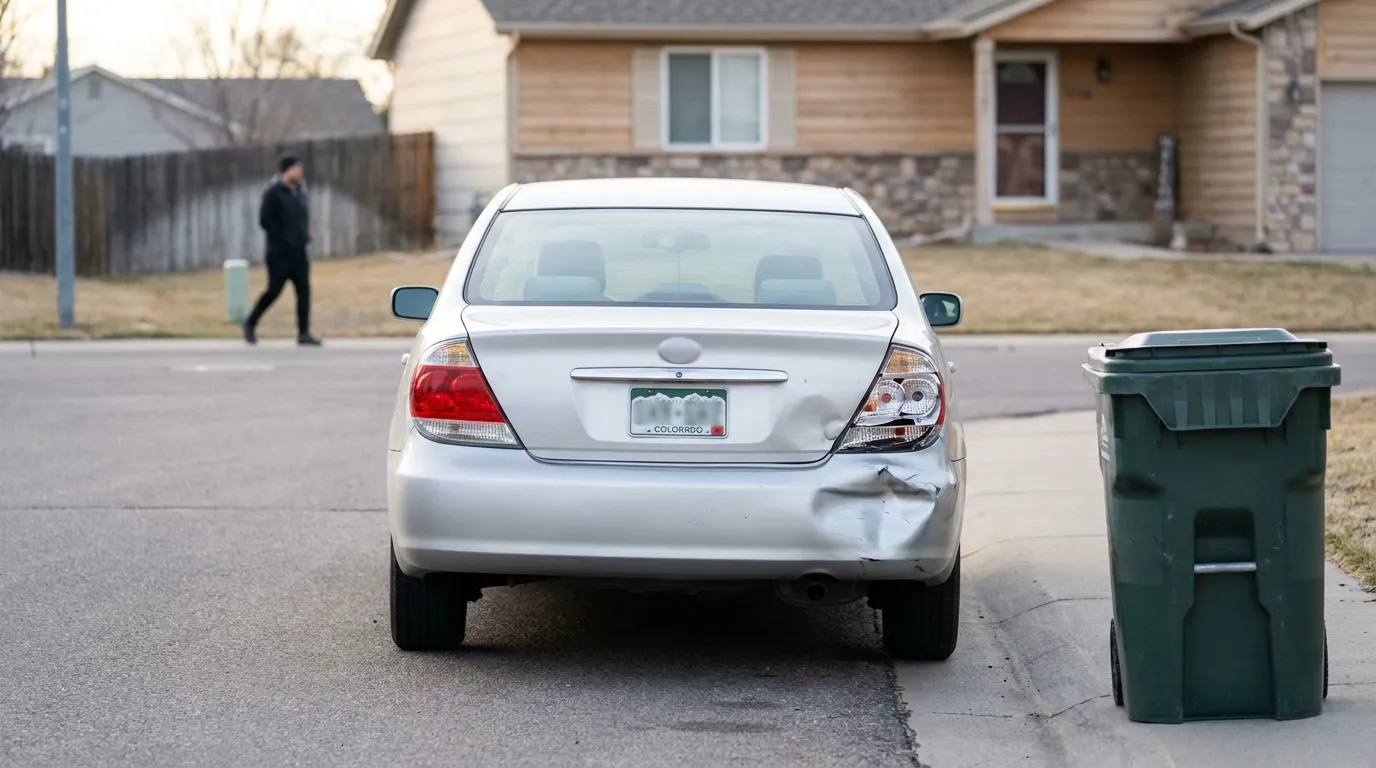
In many rideshare collisions, more than one party shares fault. Investigators use police reports, vehicle damage patterns, electronic data recorders, and witness statements to divide fault among all contributors. A second driver who ran a red light, a vehicle manufacturer responsible for a defective component, or even a government entity could share liability alongside the Uber driver.
Liability can also extend to public agencies or contractors when defective road design or malfunctioning traffic signals contribute to the collision. When evidence links the crash to a poorly designed intersection or improper signal timing in Centennial, you may be able to identify the responsible public agency or contractor. Claims against government entities carry strict notice deadlines, so prompt action is essential.
💡 Pro Tip: Photograph the entire accident scene, including traffic signals, road signs, lane markings, and any visible road defects. This evidence can be vital if a government agency or road contractor shares liability.
Colorado’s Comparative Negligence Rule and Your Recovery
Colorado follows a modified comparative negligence rule under C.R.S. § 13-21-111 that directly affects your compensation. If you are found less than 50 percent responsible for the crash, you can still recover damages, but your compensation is reduced by your percentage of fault. Once your share reaches 50 percent or more, recovery is completely barred.
This rule makes early evidence gathering especially important. Insurance companies for the Uber driver or rideshare platform may attempt to shift blame onto you to reduce or eliminate your payout. Preserving ride logs, dashcam footage, medical records, and witness contact information strengthens your position. If you have questions about fault in your Uber accident in Centennial Colorado, getting legal guidance early can protect your claim.
How an Uber Accident Attorney in Denver Can Strengthen Your Claim
Rideshare accident cases involve overlapping insurance policies, corporate legal teams, and complex liability questions that differ from standard car accident claims. An Uber accident attorney in Denver who has handled these cases understands how to identify the correct coverage period, gather platform-specific evidence, and counter the independent contractor defense.
Your attorney can also help you pursue the full range of damages available under Colorado law. Colorado HB24-1472 increased the cap on noneconomic damages to $1.5 million for civil actions filed on or after January 1, 2025, with inflation adjustments every two years starting in 2028. The same legislation increased the existing wrongful death damages cap to $2.125 million with similar inflation adjustments. You can review the full text of Colorado HB24-1472 for additional details.
- Economic damages may include medical expenses, lost wages, rehabilitation costs, and future earning capacity
- Noneconomic damages may cover pain and suffering, emotional distress, and loss of enjoyment of life
- Wrongful death damages may apply if the Uber crash resulted in a fatality
💡 Pro Tip: Keep a daily journal documenting your pain levels, limitations on daily activities, and emotional impact. This record can serve as powerful evidence when calculating noneconomic damages.
What Evidence Should You Preserve?
Acting quickly to preserve evidence is crucial after a rideshare crash. Key items include the police report, your Uber or Lyft ride history and receipts, photographs of all vehicles and the scene, medical records from the crash forward, and witness contact information. Electronic data from vehicles may also be available but can be overwritten if not preserved promptly.
What About Intentional Acts by the Driver?
Uber’s and Lyft’s liability insurers generally deny coverage for injuries that drivers intentionally cause. Standard insurance policies contain intentional acts exclusions, meaning if the driver caused harm on purpose rather than through negligence, the rideshare company’s policy may not cover your losses. In those rare situations, you may need to pursue a claim directly against the driver.
When Multiple Insurance Policies Overlap
Sorting out which insurance policy pays first can be confusing. When the driver carries personal auto insurance and Uber’s commercial policy also applies, coverage disputes between insurers are common. An Uber accident attorney Centennial residents trust can navigate these overlapping policies to identify every available source of compensation.
💡 Pro Tip: Never assume the rideshare company’s insurance adjuster is working in your best interest. Their goal is to minimize what the company pays, not maximize your recovery.
Frequently Asked Questions
1. Who pays for my injuries if the Uber driver’s app was off during the crash?
If the Uber app was completely off, only the driver’s personal auto insurance applies. That personal policy may carry only Colorado’s minimum liability limits of $25,000 per person and $50,000 per accident, which may not be enough for serious injuries. You would file a claim against the driver’s personal policy rather than Uber’s commercial coverage.
2. Can I still recover compensation if I was partially at fault for the Uber accident?
Under Colorado’s modified comparative negligence rule, you can recover damages as long as your fault is less than 50 percent. However, your compensation will be reduced by your fault percentage. If you are found 50 percent or more at fault, Colorado law bars recovery entirely.
3. What is the deadline for filing an Uber accident lawsuit in Colorado?
Colorado generally applies a two-year statute of limitations for most personal injury claims, though motor vehicle accident claims carry a three-year deadline. Claims against government entities must be preceded by a written notice of claim filed within 182 days of the injury under the Colorado Governmental Immunity Act. Consulting an attorney promptly helps ensure you do not miss critical deadlines.
4. Does Uber’s $1 million policy always apply to passengers?
Uber’s $1 million liability policy generally applies when a passenger is in the vehicle or the driver is en route to pickup. However, coverage disputes can arise, and Uber’s insurers may deny coverage for intentional acts or challenge whether the ride was truly active. Each case depends on its specific facts.
5. What should I do immediately after a rideshare crash in Centennial?
Call 911, seek medical attention, document the scene with photographs, collect witness information, and save your Uber or Lyft ride receipt. Report the accident to the rideshare company, but be mindful that this process is similar to speaking with an insurance adjuster. Avoid giving recorded statements before consulting with an attorney.
Protect Your Rights After an Uber Crash in Centennial
Determining who is liable after an Uber driver causes a crash in Centennial requires careful examination of the driver’s app status, available insurance coverage, and whether additional parties share fault. Colorado’s comparative negligence rules and recent legislative changes to damage caps make these cases both complex and high-stakes.
Jacobs Law is prepared to help you navigate the claims process and pursue the compensation you deserve. Call 303-529-4040 or contact us today to schedule a consultation about your Centennial rideshare accident case.