What Evidence Does a Centennial Car Accident Attorney Use in Claims?
A successful car accident claim in Centennial, Colorado, depends on collecting and presenting the right evidence at every stage. Because Colorado is a fault-based (tort) state, the injured party must prove that someone else’s negligence caused the collision and resulting damages. This means gathering police reports, medical records, witness statements, photographs, and even federal crash data to build a compelling case. Understanding what evidence matters and how Colorado law governs its use can significantly affect the compensation you ultimately recover.
If you were injured in a crash and need guidance on preserving critical evidence, Jacobs Law is ready to help. Call 303-529-4040 or reach out to our team today to discuss your case.
How Colorado’s Fault-Based System Shapes Centennial Car Accident Evidence
Colorado operates under a tort-based auto insurance system, which means liability insurance covers bodily injury and property damage when the insured driver is at fault for an accident. This framework places the burden on the injured party to demonstrate that another driver, entity, or product caused the crash. Unlike no-fault states where each driver’s own insurance pays regardless of blame, Colorado requires attorney to marshal evidence that directly ties fault to the opposing party.
This fault-based structure also means that the degree of each party’s negligence matters. Colorado follows a modified comparative negligence rule, which measures each party’s negligence and reduces recovery proportionally. Under this approach, a plaintiff can recover damages only if their share of fault is less than 50 percent. If a jury finds you were 20 percent at fault, your total award is reduced by that percentage. Proving negligence therefore requires precise, well-documented evidence showing the other party bore the greater share of responsibility.
💡 Pro Tip: Write down everything you remember about the accident immediately. Details like weather conditions, traffic signals, and the other driver’s behavior fade quickly, and a written account created shortly after the crash carries more weight.

Key Evidence Categories in Car Accident Claims in Centennial Colorado
Police Reports and Accident Scene Documentation
The official police report is often the first piece of evidence an attorney reviews after a car accident in Centennial. It typically includes the responding officer’s observations, a preliminary fault determination, citations issued, witness contact information, and a collision scene diagram. Photographs and video footage from the scene, dashcams, or nearby surveillance cameras can further corroborate or challenge the report’s findings.
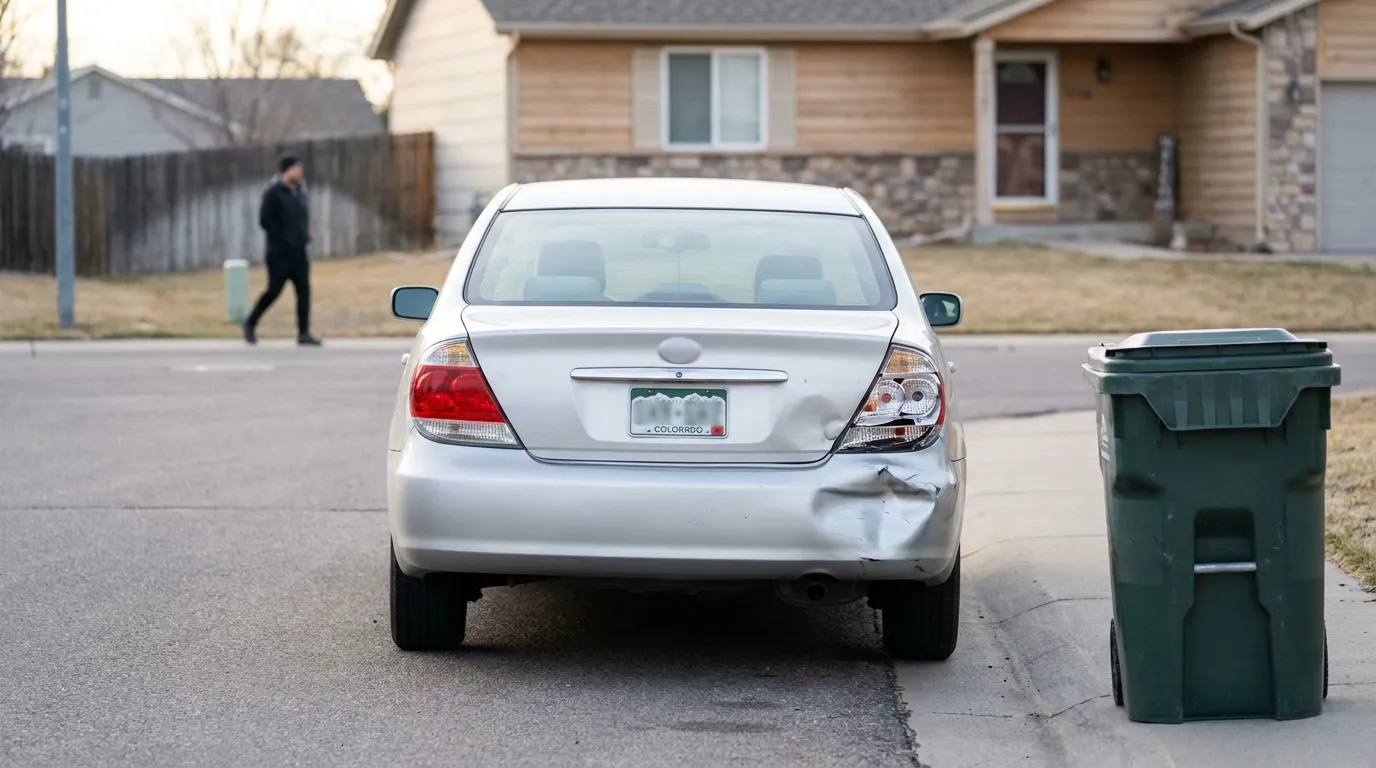
- Photographs of vehicle damage, skid marks, road conditions, and traffic signs
- Dashcam or surveillance footage capturing the moment of impact
- The police report’s narrative section and any citations issued
- Witness names and contact details listed in the report
- Weather and lighting records from the date and time of the crash
To learn more about who gathers this critical scene evidence, read about who investigates Centennial car accidents.
Medical Records and Billing Documentation
Medical evidence forms the foundation of your damages claim. Hospital records, diagnostic imaging, surgical notes, and rehabilitation documentation all help establish the nature and severity of your injuries. Equally important is how those medical expenses are presented at trial.
Under Colorado’s collateral source statute, C.R.S. § 13-21-111.6, evidence of amounts paid by third-party insurers is inadmissible during trial. This means attorney must use billed medical expenses rather than the discounted amounts your health insurance actually paid. The court reduces the verdict by collateral source payments only after the jury returns its verdict. However, benefits paid under a contract entered into by or on behalf of the plaintiff, such as private health insurance premiums you personally paid, are generally exempt from that post-verdict reduction.
💡 Pro Tip: Keep every medical bill, receipt, and explanation of benefits (EOB). Even if your health insurance covers a portion, the full billed amount is what your attorney presents to the jury.
How a Car Accident Attorney in Denver Proves Negligence
Establishing the Four Elements
Every car accident negligence claim requires proof of four elements: duty, breach, causation, and damages. In most Centennial collisions, every driver owes a duty of reasonable care to others. Breach occurs when a driver violates that duty by running a red light, texting while driving, or following too closely. Causation links that breach directly to the collision and your injuries. Damages encompass medical bills, lost wages, pain and suffering, and other measurable losses.
Building a car accident case in Denver and Centennial often involves layering multiple evidence types to satisfy each element. A police report may establish breach, medical records prove damages, and accident reconstruction analysis ties everything together through causation. When fault is disputed, the modified comparative negligence threshold makes evidence quality critical, because reaching 50 percent or more fault bars recovery entirely.
| Evidence Type | Element Supported | Common Sources |
|—|—|—|
| Police report and citations | Duty and breach | Law enforcement records |
| Photographs and video | Breach and causation | Scene photos, dashcams, surveillance |
| Medical records and bills | Damages and causation | Hospitals, physicians, therapists |
| Witness statements | Breach and causation | Bystanders, passengers |
| Federal crash and vehicle data | Causation and breach | NHTSA databases |
| Employment and wage records | Damages | Employers, tax returns |
💡 Pro Tip: If the other driver received a traffic citation at the scene, that citation can serve as strong evidence of breach, though it is not automatically conclusive in a civil claim.
Federal Crash Data and Vehicle Safety Records
Attorneys handling car accident claims in Centennial Colorado can draw on federal databases maintained by the National Highway Traffic Safety Administration (NHTSA) to strengthen a case. NHTSA’s crash data systems offer official federal crash statistics and causation information that may be relevant in litigation.
NHTSA’s recall and complaint databases allow attorney to identify known vehicle defects that may have contributed to an accident. If a brake system, airbag, or tire was subject to a federal recall at the time of the crash, that information can support a product liability theory alongside or in place of a standard negligence claim. NHTSA also publishes compliance test reports for Federal Motor Vehicle Safety Standards (FMVSS), which can demonstrate whether a specific vehicle met safety requirements at manufacture.
The Crash Injury Research and Engineering Network (CIREN) program offers another valuable resource. CIREN conducts in-depth crash investigations integrating engineering and medical evidence to determine injury causation. Its multidisciplinary approach, combining engineering, medicine, and related fields, mirrors the analysis attorney use when proving how specific crash forces led to injuries. CIREN teams systematically collect over 1,000 data elements per investigated crash, providing a detailed framework that can support claims.
How Colorado Insurance Minimums Affect Your Evidence Strategy
Colorado requires all drivers to carry minimum liability insurance of $25,000 per person and $50,000 per accident for bodily injury, plus $15,000 for property damage. When the at-fault driver carries only minimum coverage, the available insurance may fall well short of covering serious injuries. In those situations, your attorney may need to explore additional sources of recovery, such as your own underinsured motorist coverage or, in commercial vehicle cases, the employer’s policy.
Self-insurance is also permitted in Colorado for individuals who have more than 25 registered vehicles, a situation most commonly encountered in commercial fleet accidents. When a self-insured entity is involved, the claims process and evidence requirements may differ, and a Centennial Colorado car accident attorney can help you navigate those differences.
💡 Pro Tip: Ask your insurance company about your underinsured and uninsured motorist coverage limits. If the at-fault driver’s policy cannot fully compensate you, your own UM/UIM coverage may fill the gap.
Frequently Asked Questions
1. What is the most important piece of evidence in a Centennial car accident claim?
There is no single most important piece. However, medical records and the police report together generally form the backbone of most claims. Medical documentation proves the extent of your injuries, while the police report often provides the initial basis for establishing fault.
2. How does Colorado’s comparative negligence rule affect my case?
Colorado’s modified comparative negligence rule reduces your recovery by your percentage of fault and bars recovery entirely if you are less than 50 percent at fault. Your attorney will gather evidence specifically aimed at minimizing any fault attributed to you.
3. Can federal vehicle safety data help my car accident claim?
Yes. NHTSA maintains recall databases, complaint records, and compliance test reports that can reveal whether a vehicle defect contributed to the crash. This data may support a product liability claim in addition to a negligence theory.
4. Why does my attorney use billed medical expenses instead of what my insurance paid?
Under C.R.S. § 13-21-111.6, evidence of amounts paid by third-party insurers is inadmissible at trial. Your attorney presents the full billed amount to the jury, and any collateral source reductions occur only after the verdict.
5. What should I do immediately after a car accident in Centennial to preserve evidence?
Call 911, seek medical attention, photograph the scene and vehicle damage, collect witness contact information, and avoid giving recorded statements to the other driver’s insurance company before consulting an attorney.
Taking the Next Step After a Centennial Car Accident
Recovering from a car accident involves far more than healing physically. The evidence you collect and how it is presented under Colorado law directly shapes the compensation you may receive for medical bills, lost wages, and pain and suffering. From police reports and medical records to federal crash databases and Colorado’s collateral source statute, each piece of evidence plays a specific role in proving negligence and documenting your losses. An experienced Car Accident Attorney in Denver and Centennial can help you identify, preserve, and present this evidence effectively.
If you are dealing with the aftermath of a collision in Centennial or anywhere in the Denver metro area, Jacobs Law is here to guide you through the process. Call 303-529-4040 or contact us now for a case evaluation.