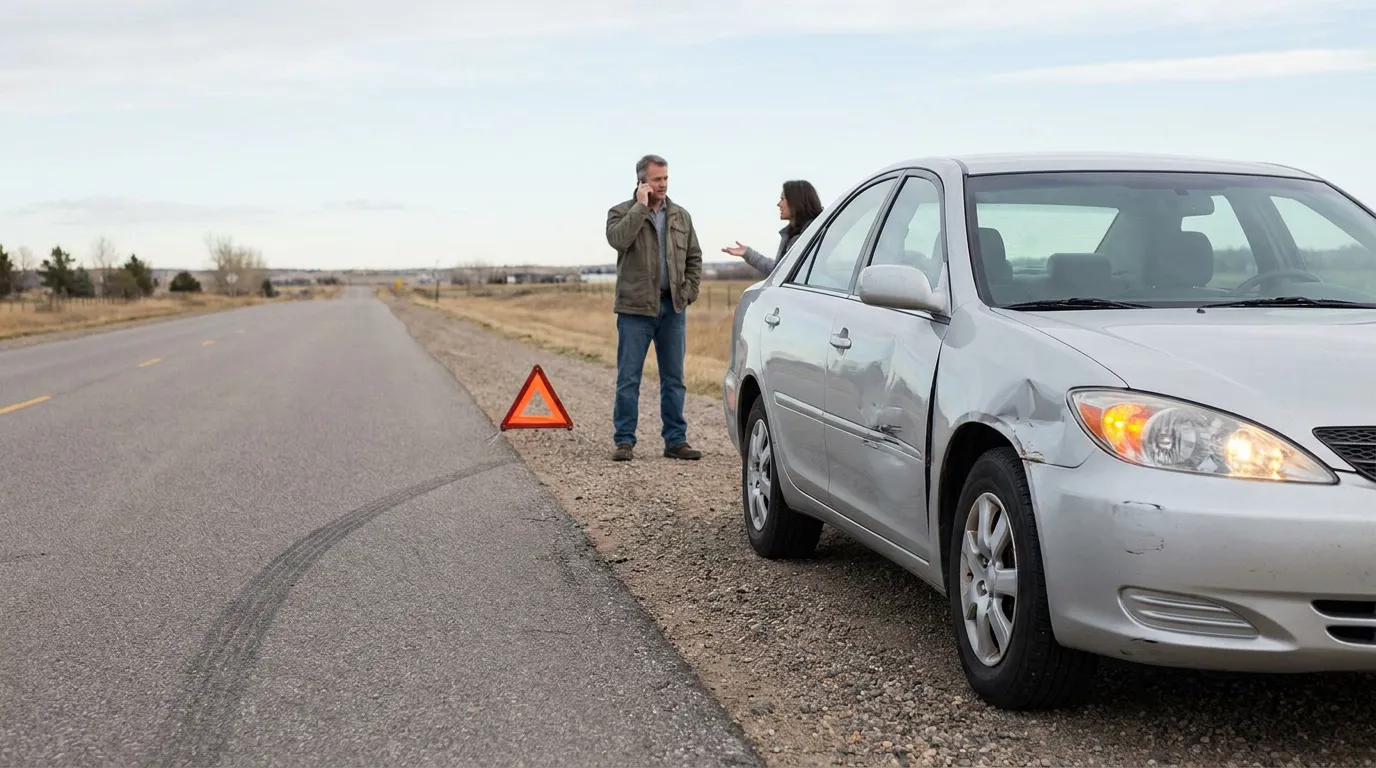
Colorado State Patrol typically handles accidents on state highways and interstates, while the Arapahoe County Sheriff’s Office investigates crashes on city streets within Centennial. However, both agencies may respond to serious accidents involving injuries or fatalities.
Understanding which agency handles your case matters because it determines where you’ll obtain crucial reports and what evidence gets collected. Since Centennial’s incorporation on February 7, 2001, the city has contracted law enforcement services from the Arapahoe County Sheriff’s Office, creating a unique structure for accident investigations that residents need to understand. If you were hurt, a Denver-area car accident attorney can explain what the investigation means for your claim.
Which Agency Responds to Your Crash
The investigation involves multiple agencies working together to create a comprehensive record. The Arapahoe County Sheriff’s Office, maintaining its Centennial operations at 13101 E. Broncos Pkwy., serves as the primary law enforcement agency for accidents within city limits.

Finding Out Who Took Your Report
If you are not sure who handled your crash, start with the paperwork from the scene. The card or slip an officer hands out often names the agency and lists a report number. The officer’s uniform and the markings on the patrol car are other clues.
If you still cannot tell, ask the records office of the agency you think responded. Share when and where the crash happened so the records staff can look it up. If no officer came to the scene at all, see our post on what to do when the state patrol won’t respond.
Your Rights When Requesting Investigation Records
When law enforcement arrives at your accident scene, you have specific rights that protect your interests. Colorado law ensures accident victims can access investigation records, though the Colorado State Patrol treats records requests under the Colorado Criminal Justice Records Act (CCJRA) rather than standard open records laws. The CCJRA requires requesters to affirm that records won’t be used for direct business solicitation.
Insurance companies can request public accident reports, but Colorado’s CCJRA protects certain criminal justice records from unauthorized disclosure. Complete case files may require your authorization for release.
What Officers Document at the Scene
Modern accident investigations involve far more than simple measurements and witness statements. Today’s law enforcement officers use sophisticated tools to document crash scenes, creating detailed records that can prove invaluable for your case. Understanding what evidence gets collected helps you appreciate the investigation’s scope and ensures you request all relevant materials.
Officers responding to accidents in Centennial collect various forms of evidence, from traditional photographs to digital video from dash cameras and body-worn cameras. The Centennial Public Safety page emphasizes modernized law enforcement services, reflecting how technology has transformed accident investigations. Colorado State Troopers now routinely capture high-definition video evidence that can provide crucial perspectives on how accidents unfold, revealing details that witness statements might miss, such as weather conditions, traffic signal timing, or driver behavior before impact.
Officers complete a DR3447 crash form, processed through the Department of Revenue and entered into the DRIVES database.
Pro Tip: When requesting records, specifically ask for all digital media including dash cam footage, body-worn camera video, and any traffic or surveillance camera recordings that may have captured your accident.
Pro Tip: Make your own record at the scene with photos, witness names and a written account of what happened, while it is still fresh in your mind. For the full list of steps after a collision, see what to do after a car accident.
Colorado’s open records laws allow requesting intersection-specific crash data from CDOT, revealing dangerous patterns, which can be valuable evidence for establishing negligence. Our post on what evidence supports a car accident claim explains how that proof is used.
Talking With the Investigating Officer
The officer will usually ask each driver and any witnesses what happened. Stick to what you saw and felt, and say so if you are not sure about a detail such as speed or distance. Mention any pain, even if it seems minor, so it gets noted. Before the officer leaves, ask when and where the report will be available.
How Long the Investigation Takes
Understanding the typical timeline helps you plan your next steps and manage expectations. The investigation begins when officers arrive, but obtaining complete documentation can take weeks or even months.
- Immediate response (0-2 hours): Officers secure the scene, document initial findings, and may issue citations
- Initial report filing (24-72 hours): The investigating officer submits their preliminary report
- Basic crash report availability (5-10 business days): A synopsis becomes available through the CSP Central Records Unit or ACSO
- Complete case file compilation (2-6 weeks): The full investigation report, including witness statements, photographs, and video evidence, becomes available for complex cases
- CDOT data processing (3-6 months): Crash data gets processed by CDOT for engineering analysis
Basic Crash Report or Complete Case File
A basic crash report provides a synopsis with fundamental information about the accident. A complete case file encompasses the entire investigation, including witness statements, photographs, dash cam footage, and supplemental reports. While basic reports suffice for insurance claims, complete files often prove essential for legal cases.
How to Get a Copy of Your Report
Report costs vary by type. Request CSP records through their Central Records Unit. For ACSO reports, contact their Public Information Office. You may not need to go in person, since sheriff’s office reports can also be requested through Arapahoe County’s online portal.
Pro Tip: Always ask the responding officer for their name, badge number, and which agency they represent; this information will be essential when requesting your accident report later.
Is There a Deadline to Request Your Report?
While there’s no specific deadline for requesting accident reports, obtaining them promptly benefits your case. Colorado’s statute of limitations for car accident lawsuits is typically three years from the date of the accident, making early report acquisition crucial for preserving your legal options. Reporting a crash to the DMV is covered in our post on missing the DMV report deadline.
Why the Investigating Office Matters for Your Claim
Knowing who investigated tells you where to send every follow-up. Requests for the report, questions about a delay and any correction all go to the office that wrote it.
It also helps when you deal with insurers, since adjusters often ask for the report number and the name of the responding office early in a claim. Tips for those calls are in our post on handling adjusters after a crash.
When the Report Has Mistakes
Read your report as soon as it arrives. Compare the names, vehicle details, location and description of the crash with your own photos and notes.
If you spot a factual error, contact the agency that wrote the report and ask how to request a correction or add a supplemental report. Keep copies of everything you send. An officer may not change an opinion about how the crash happened, but your photos, witness names and medical records can still fill in the rest of the story.
After the Investigation
Once the initial investigation concludes, your focus shifts to building your case and pursuing fair compensation. The evidence collected forms the foundation of your claim. If an insurer makes an offer before the full file is in, read about whether to accept a first insurance offer.
Pro Tip: Keep a dedicated file for all accident-related documents, including medical records, correspondence with insurance companies, and any communication from law enforcement agencies.
Don’t wait for the investigation to conclude before consulting an attorney; early legal intervention can help preserve evidence and protect your rights from the start.
Talk With Jacobs Law
If you were hurt in a crash in Denver, Centennial or anywhere in the south metro, we can help. Contact Jacobs Law to schedule a free consultation and tell us what happened.