The Fine Print Behind Every Uber Ride in Centennial
Key Takeaways: Uber’s app terms typically require arbitration rather than jury trial for disputes. Colorado courts evaluate these clauses under the Colorado Uniform Arbitration Act, C.R.S. §§ 13-22-201 through 13-22-230, with the Federal Arbitration Act potentially preempting state rules that disfavor arbitration. Filing suit does not defeat the clause; C.R.S. § 13-22-207 directs courts to decide enforceability summarily and stay the case. Pedestrians, cyclists, and other vehicle occupants who never accepted app terms generally are not bound. Arbitration outcomes are largely final, with vacatur available only on narrow grounds under C.R.S. § 13-22-223. Preserving ride logs, police reports, photographs, and medical records early remains essential.
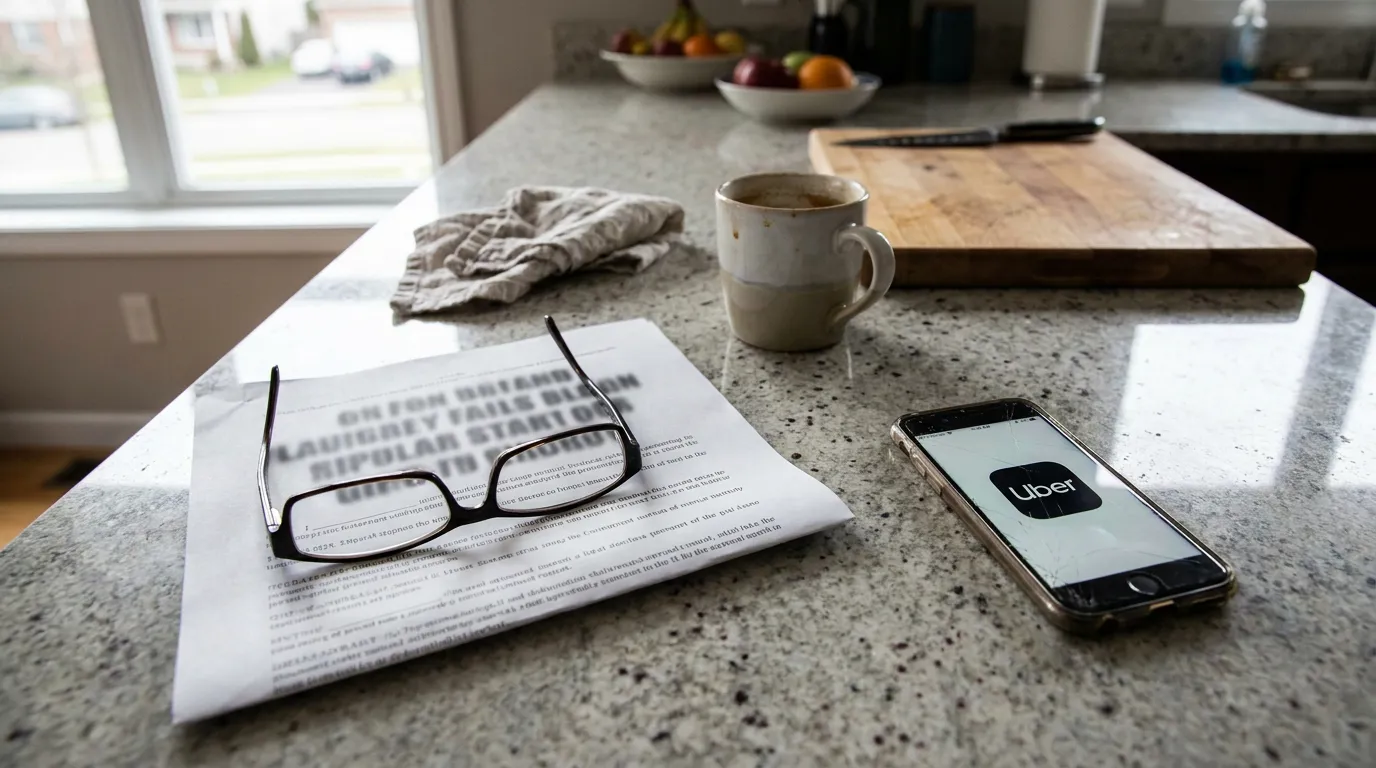
When you tapped "accept" on Uber’s terms, you may have agreed to resolve disputes through private arbitration instead of jury trial. That provision can reshape how an injury claim proceeds after a crash on Arapahoe Road, I-25, or elsewhere in Centennial. The clause generally does not erase your ability to seek compensation, but it may change the forum, procedure, and available review.
If you were hurt in a rideshare collision and are unsure whether the app’s terms limit your options, guidance matters early. The team at Jacobs Law helps injured passengers, pedestrians, cyclists, and other drivers across the Denver metro area evaluate arbitration language and preserve evidence. Call 303-529-4040 or contact us now to discuss what happened.
What an Uber Arbitration Clause Actually Requires
An arbitration clause is a contractual promise to submit disputes to a private decision-maker rather than a court. In Uber’s app terms, riders and drivers generally agree that many claims will be heard by an arbitrator, often individually rather than as part of a class. Recent versions have carved out certain personal injury claims from arbitration or allowed opt-outs within a stated window. Because terms change over time and scope is frequently contested, courts may consider whether a particular injury claim arises from the agreement.
Three distinct questions often arise. First, did a binding agreement to arbitrate form. Second, does the dispute fall within the clause’s scope. Third, who decides those questions, judge or arbitrator.
Not Every Injured Person Signed Anything
Pedestrians, cyclists, and occupants of other vehicles typically never accepted Uber’s app terms. If you were struck by a rideshare vehicle while walking through a Centennial crosswalk, you may have no contractual relationship with the platform. An arbitration agreement generally cannot be enforced against a non-signatory absent recognized exceptions such as agency, third-party beneficiary status, or equitable estoppel. If you are weighing your paths forward, review your legal options for Uber accidents before assuming arbitration applies.
How Colorado Law Governs an Uber Arbitration Clause Personal Injury Dispute
Colorado does not evaluate rideshare arbitration clauses in a vacuum. These agreements generally fall under the Colorado Uniform Arbitration Act, C.R.S. §§ 13-22-201 through 13-22-230, which a Centennial court would apply alongside the Federal Arbitration Act. Uber’s terms typically invoke the FAA, and federal law may preempt state rules that disfavor arbitration, though generally applicable contract defenses such as fraud, duress, and unconscionability still apply. The framework covering Colorado arbitration agreements sets out how these disputes proceed.
Enforceability is addressed by specific statutory provisions. C.R.S. § 13-22-206 provides that an agreement to arbitrate is valid, enforceable, and irrevocable except on grounds that exist at law or equity for revoking a contract. It also addresses whether a court or arbitrator decides threshold arbitrability issues.
One important limitation deserves emphasis. C.R.S. § 13-22-204 establishes that certain protections cannot be waived at all, and others cannot be waived before a controversy arises.
💡 Pro Tip: Save a screenshot or PDF of the exact version of Uber’s terms in effect on the date of your ride. Platforms update terms regularly, and the operative version can be difficult to reconstruct months later.
What Happens Procedurally If You File Suit Anyway
Filing a lawsuit in Arapahoe County District Court does not automatically defeat an arbitration clause. Under the statutory procedure for motions to compel arbitration, C.R.S. § 13-22-207 requires that a motion be filed in the pending court action, and the court shall stay the judicial proceeding until it renders a final decision.
The court’s task is generally narrow. Under C.R.S. § 13-22-207(1)(a)-(b), if a party shows an agreement to arbitrate and the other side refuses, the court shall proceed summarily and order arbitration unless it finds no enforceable agreement exists. The practical fight in a Centennial rideshare case is often over enforceability, not the injury claim’s strength.
The Merits of Your Claim Are Not the Issue
A court generally may not refuse to order arbitration because the underlying claim looks weak. C.R.S. § 13-22-207(4) provides that a court may not refuse arbitration because the claim lacks merit or grounds have not been established. A strong rideshare injury case is generally not exempt from a valid clause.
A claimant is not without recourse. Under C.R.S. § 13-22-207(2)-(3), a party contending no valid agreement exists may move the court to stay arbitration, and the court proceeds summarily. If arbitration is ordered, C.R.S. § 13-22-207(7) provides the court shall stay any judicial proceeding involving a claim subject to arbitration.
| Stage | Governing Provision | Practical Effect |
|---|---|---|
| Is the clause valid | C.R.S. § 13-22-206 | Determines enforceability and who decides |
| Motion to compel or stay | C.R.S. § 13-22-207 | Court decides summarily |
| Nonwaivable protections | C.R.S. § 13-22-204 | Some rights cannot be contracted away |
| Confirming an award | C.R.S. § 13-22-222 | Award may become enforceable judgment |
| Vacating an award | C.R.S. § 13-22-223 | Narrow statutory grounds only |
Why Older Colorado Arbitration Cases May Not Control
Colorado’s current arbitration framework dates from a substantial 2004 overhaul. This part was added in 1975, then repealed and reenacted in 2004, resulting in the addition, relocation, and elimination of sections. Older Colorado arbitration precedent may not control a modern dispute, though some earlier decisions remain persuasive where current statutory language is unchanged.
That history matters when reading general commentary online. Articles written before the Revised Uniform Arbitration Act may describe procedures that no longer apply.
Arbitration Outcomes Are Largely Final
One significant consequence of arbitration can be limited review. Under C.R.S. § 13-22-222, a court shall confirm an award on motion unless modified, corrected, or vacated, and under C.R.S. § 13-22-223 an award may be vacated only on narrow grounds such as corruption, fraud, evident partiality by an arbitrator, or an arbitrator exceeding authority. A motion to vacate is subject to a short filing deadline. C.R.S. § 13-22-228 identifies orders from which appeals may be taken, and review remains limited in scope.
Several provisions influence the arbitration process:
- C.R.S. § 13-22-205, addressing applications for judicial relief
- C.R.S. § 13-22-212, requiring arbitrator disclosures of potential conflicts
- C.R.S. § 13-22-217, governing witnesses and discovery
- C.R.S. § 13-22-222, addressing confirmation of an award
- C.R.S. § 13-22-227, addressing venue where no case is pending
Evidence Still Drives the Result
Arbitration generally changes the forum, not the burden of proof. You still must establish negligence, causation, and damages, which means ride logs showing the driver’s app status, the police report, photographs, witness statements, and consistent medical records remain essential. Discovery in arbitration is often more limited than in court, so preserving materials promptly is critical.
💡 Pro Tip: Request your trip receipt and ride history through the app early. Records tying the driver’s status to the moment of impact often determine which insurance layer applies.
Deadlines generally continue to run while arbitration questions are litigated. In Colorado, most motor vehicle injury claims are subject to a three-year statute of limitations under C.R.S. § 13-80-101(1)(n), and shorter notice requirements can apply when a public entity is involved. Courts interpret tolling exceptions narrowly, and a demand for arbitration does not necessarily preserve an otherwise time-barred claim. Working with an experienced uber arbitration clause personal injury lawyer may help reduce the risk that a forum dispute consumes available filing time.
Frequently Asked Questions
1. Does an arbitration agreement mean I cannot recover injury compensation?
Not necessarily. Arbitration generally changes where and how your claim is heard, not whether damages may be awarded. Medical expenses, lost wages, and pain and suffering may still be pursued, subject to applicable limits, available coverage, and case facts.
2. I was a pedestrian, not a rider. Does the clause apply to me?
Often it does not. People who never accepted app terms generally lack the contractual relationship arbitration depends on, though exceptions such as agency or equitable estoppel exist in limited circumstances. A careful review of the specific terms and your relationship to the ride is necessary.
3. Who decides whether Uber’s clause is enforceable?
That question is itself governed by statute and case law. C.R.S. § 13-22-206 addresses validity and allocates threshold questions between court and arbitrator, and C.R.S. § 13-22-207 directs the court to proceed summarily when a motion to compel is filed. Where a clause clearly delegates arbitrability to the arbitrator, a court may send even that question to arbitration.
4. Can I appeal an arbitration award I disagree with?
Generally only on narrow grounds. C.R.S. § 13-22-223 permits vacatur for limited reasons such as corruption, fraud, evident partiality, or an arbitrator exceeding authority, within a short statutory deadline; C.R.S. § 13-22-228 identifies appealable orders. Dissatisfaction with the result is generally not sufficient.
5. Should I still report the crash and gather evidence if arbitration seems likely?
Generally yes. Evidence requirements typically do not soften in arbitration. Police reports, photographs, witness contact information, and prompt medical treatment support your claim regardless of forum.
Protecting Your Claim Regardless of the Forum
An Uber arbitration clause is a meaningful contractual term, but not necessarily the end of a Centennial rideshare claim. Colorado’s Revised Uniform Arbitration Act sets out how enforceability is tested, when a court may compel arbitration, which protections cannot be waived, and how limited review of an award may become. Whether you were a passenger bound by app terms or a pedestrian who never agreed to anything, the outcome may depend on specific facts, the version of terms in effect, and the evidence you preserve.
You do not have to interpret contract language and statutory procedure on your own while recovering from injuries. Reach out to Jacobs Law for a discussion of your Centennial Uber accident claim. Call 303-529-4040 or schedule a consultation to get clear answers about your next steps.
Disclaimer: This content is for informational purposes only and is not legal advice. Every case is unique, and results may vary. Consult an attorney about your specific circumstances.