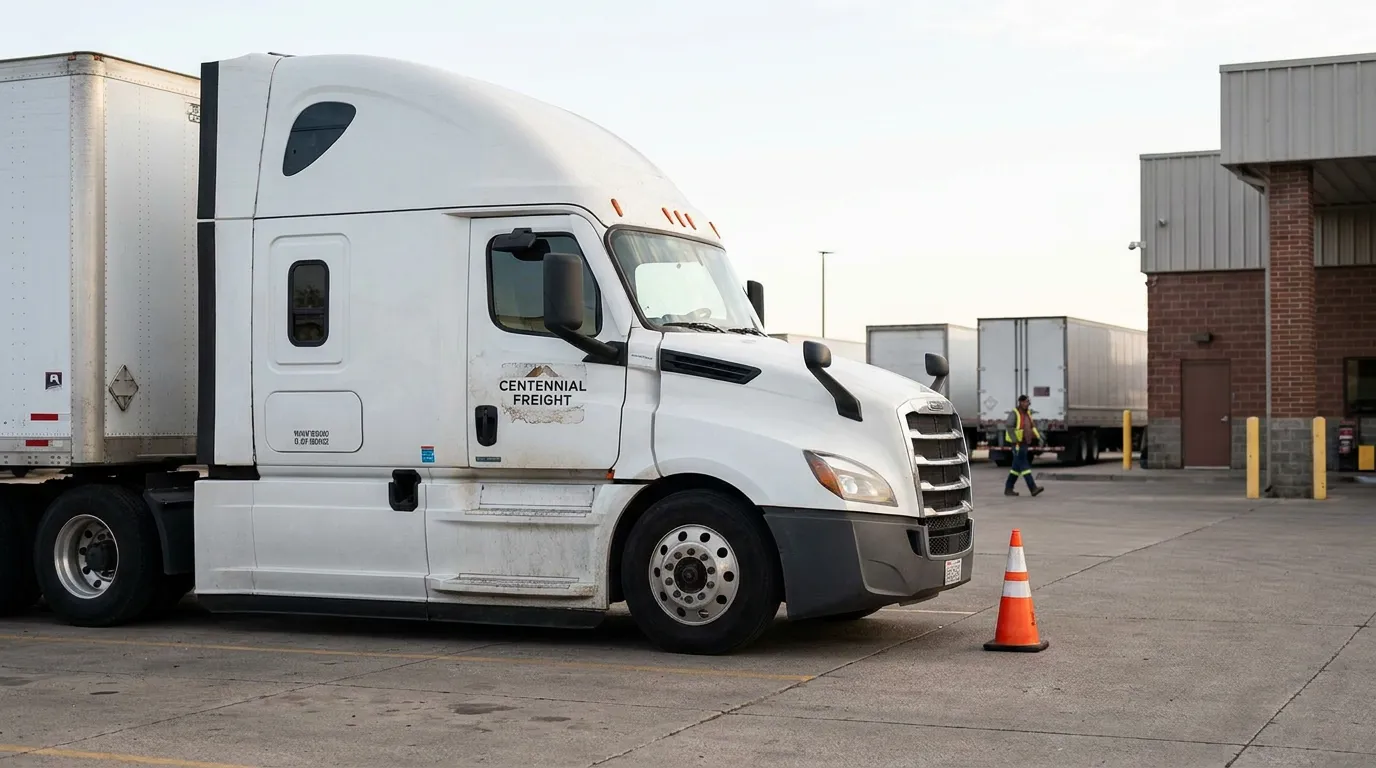
When a Truck’s Rear Guard Fails: Building a Centennial Underride Claim
Key Takeaways: Proving underride guard failure in a Centennial truck crash requires preserving the trailer quickly, as carriers often repair, scrap, or return trailers to service within weeks. Physical proof includes guard inspection, metallurgical analysis of fracture surfaces, corrosion, and prior weld repairs, supported by collision reconstruction and event data downloads. Maintenance files, DOT inspection reports, and repair invoices can reveal neglect. Liability is built under Colorado’s negligence framework, potentially strengthened by negligence per se where a safety regulation applies, and may include a product defect claim against the trailer or guard manufacturer. Fault may be apportioned among multiple parties, while damages are separated into economic, noneconomic, and physical impairment categories. Time limits can bar even strong claims.
Proving underride guard failure requires physical evidence from the trailer, technical analysis of why the guard failed, and a legal theory tying the failure to a responsible party. Underride crashes are among the most catastrophic collisions on Colorado roads because the passenger compartment often absorbs the impact directly.
If you or someone you love was hurt in a rear-impact truck collision along I-25, Arapahoe Road, or anywhere in the Denver metro area, timing matters. The team at Jacobs Law handles catastrophic commercial vehicle claims for Colorado residents and can move to preserve trailer evidence before it disappears. Call 303-529-4040 or contact us now to discuss your situation.
Why FMVSS 223 Underride Guard Failure Cases Are Different
A standard rear-end collision claim focuses on driver conduct, while an underride case may point in two directions at once. The truck driver or motor carrier may have been negligent in stopping, parking, lighting, or maintaining the trailer. Separately, the rear impact guard hardware may have failed to perform as designed. Both theories can often be pleaded in the same lawsuit.
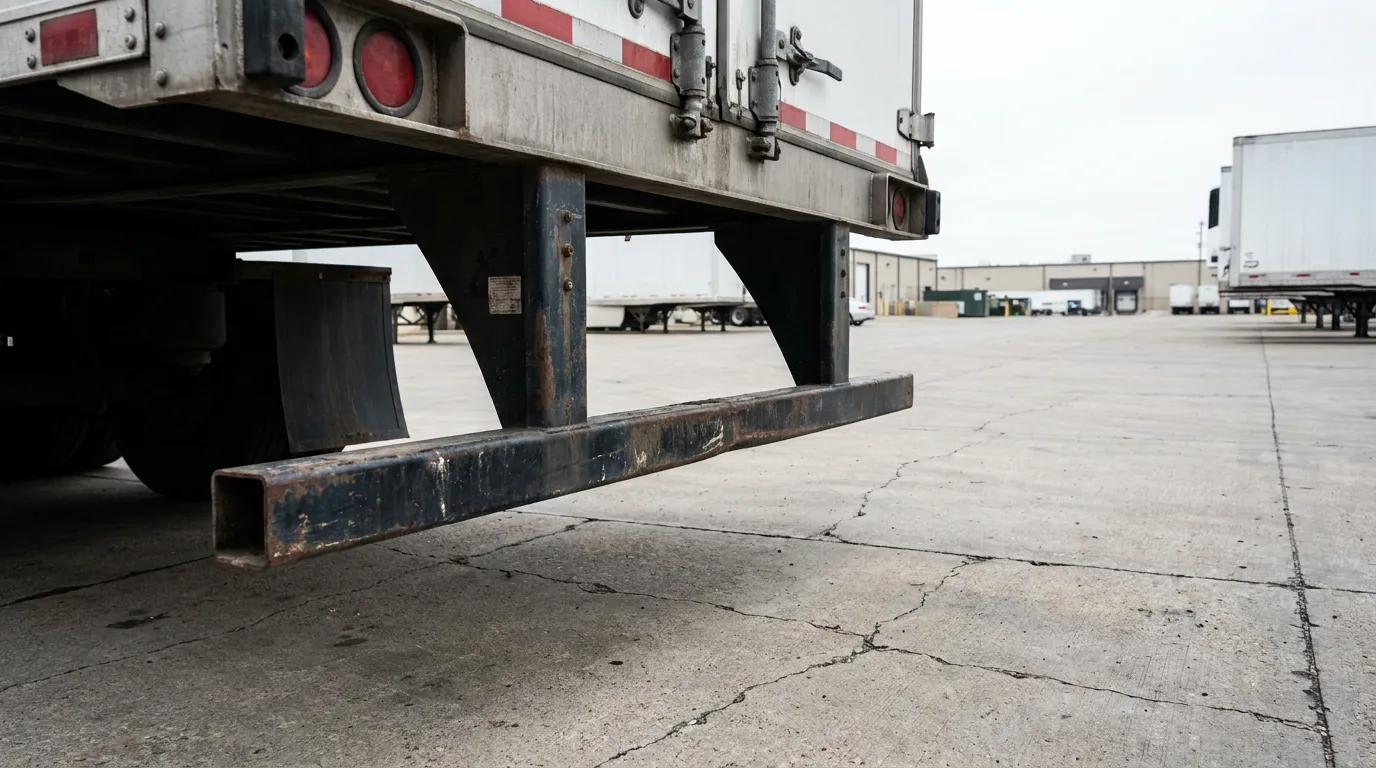
Federal rear impact protection standards, principally FMVSS 223 for the guard and FMVSS 224 for its installation, address the strength, energy absorption, and dimensions of guards on many trailers. A guard that separated at the welds, sheared at the mounting brackets, or folded upward under a modest-speed impact may raise questions about compliance and condition. Compliance and defect are distinct legal concepts, a guard that met standards when built may have degraded through corrosion, prior impacts, or metal fatigue.
Physical Proof: What Investigators Look For First
The trailer is often the single most important piece of evidence and the most likely to vanish. Carriers routinely repair, repaint, scrap, or return trailers to service within weeks. A prompt spoliation letter demanding preservation of the trailer, guard assembly, maintenance records, and inspection reports is often among the first steps.
Guard Inspection and Metallurgical Analysis
Physical guard inspection reveals whether failure was sudden or progressive. Fracture surfaces tell a story: brittle overload fractures look different from fatigue striations that develop over thousands of load cycles. Corrosion at attachment points, prior weld repairs, cracked gussets, and non-original replacement hardware can support a maintenance or product theory.
Collision Reconstruction and Vehicle Data
Collision reconstruction converts scene evidence into speed, angle, and force conclusions. Crush profiles, underride depth, tire marks, roadway gouges, and event data recorder downloads from both vehicles help establish closing speed. That number matters because a guard is tested against defined impact conditions rather than all real-world crash forces. Careful evidence gathering after a Centennial crash frequently influences whether a defect theory survives.
Records That Reveal Neglect
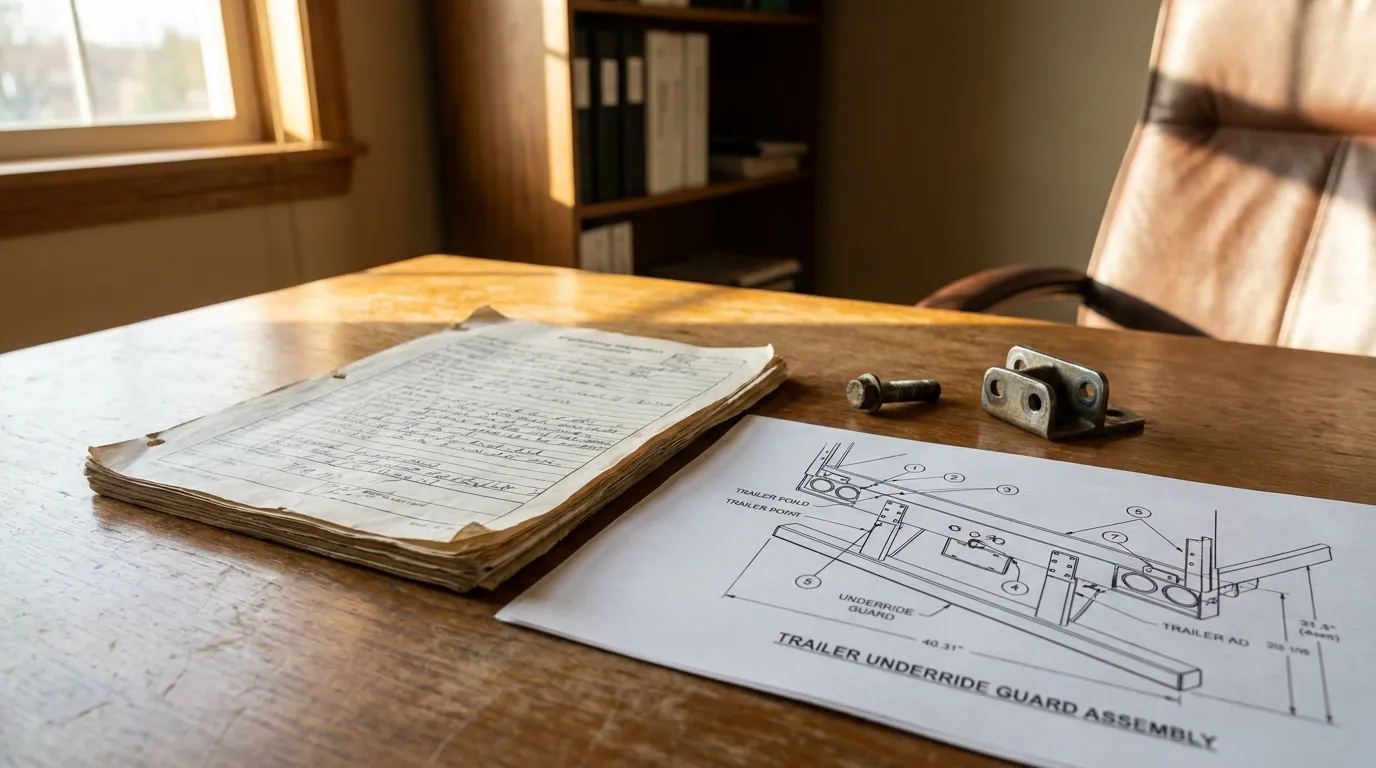
Paper trails often prove what metal alone may not. Records worth demanding early include:
- Annual DOT inspection reports and any rear impact guard notations
- Repair invoices, welding records, and parts orders for the guard assembly
- Driver vehicle inspection reports for the days before the collision
- Prior accident reports involving the same trailer
- Purchase documents identifying the trailer and guard manufacturer
Proving Liability Under Colorado’s Negligence Framework
Colorado juries in a Centennial truck crash case are generally instructed that a plaintiff must prove injuries or damages, that the defendant was negligent, and that the negligence caused the losses. Each element must be shown by a preponderance of the evidence. These elements come from Colorado’s pattern civil jury instructions on the elements of negligence liability.
Where a safety regulation applies, a violation may be presented as negligence per se. Colorado’s pattern instruction provides that an unexcused violation of an applicable statute, ordinance, or regulation constitutes negligence. Under Notes on Use citing Scott v. Matlack, Inc., 39 P.3d 1160 (Colo. 2002), and Davenport v. Community Corrections of the Pikes Peak Region, Inc., 962 P.2d 963 (Colo. 1998), the instruction is given when the regulation was meant to protect against the type of harm suffered and the injured person falls within the protected class. Causation and damages must still be proven separately.
💡 Pro Tip: Photograph the trailer’s rear guard, VIN plate, and any DOT identification numbers at the scene if safe to do so. Those identifiers can let counsel trace the manufacturer and recall history later.
Adding a Product Defect Claim Against the Manufacturer
A defect theory targets the design, manufacture, or warnings associated with the guard assembly. Design defect proof in Colorado is typically evaluated under a risk-benefit analysis, often supported by evidence of a safer practical alternative design, along with testing or literature showing how a compliant guard performs. Colorado law creates rebuttable presumptions, including that a product complying with applicable government standards at the time of sale was not defective.
Fault allocation can work differently once a product claim enters the case. Colorado’s pattern instructions note that in product liability cases where the comparative fault statute, § 13-21-406, C.R.S., or the pro rata liability statute, § 13-21-111.5, C.R.S., applies, product-specific verdict forms are used. The jury may be asked to divide responsibility among the driver, the carrier, the manufacturer, and the injured person.
| Theory | Primary Target | Core Proof |
|---|---|---|
| Negligence | Driver and motor carrier | Inspection, maintenance, and conduct evidence |
| Negligence per se | Driver and motor carrier | Applicable safety regulation violation plus causation |
| Product defect | Trailer or guard manufacturer | Design, manufacturing, and testing analysis |
Pleading both theories is often permitted, but the jury may be told that a plaintiff cannot recover twice for the same loss. Colorado’s pattern instruction on multiple recovery addresses alternative but duplicative claims for relief.
How Damages Are Presented to a Colorado Jury
Underride injuries tend to be severe, and Colorado’s damages instructions separate compensation into distinct categories. The pattern instructions on damages for personal injuries cover injuries to adults and minors, loss of consortium, and property loss. Special interrogatories may ask jurors to state amounts for economic losses, noneconomic losses, and physical impairment or disfigurement separately.
That separation carries real consequences. Noneconomic damages in Colorado negligence cases are generally subject to a statutory cap under § 13-21-102.5, C.R.S., which is adjusted for inflation and may be raised by the court on clear and convincing evidence, while physical impairment and disfigurement damages are not subject to that cap.
Pre-Existing Conditions Are Not a Defense Shield
Defense arguments that an injury pre-dated the crash do not automatically defeat recovery. Colorado maintains dedicated instructions on the thin skull doctrine, aggravation of a pre-existing condition, and damages caused by an unrelated second event. A defendant generally takes the injured person as found, though recovery is limited to the harm actually caused or aggravated.
Deadlines That Can End a Strong Case
Colorado imposes filing deadlines on personal injury, wrongful death, and product liability claims, and missing one can bar recovery. Deadlines vary by claim type, and actions arising from the use of a motor vehicle are governed by a different limitations period than many other injury claims.
Time-based product defenses deserve separate attention. Colorado law creates a rebuttable presumption that a product was not defective once it has been in use for a defined period, and separate repose provisions may apply. Tolling may extend a deadline in limited circumstances, such as during a plaintiff’s minority or disability, but Colorado courts have interpreted such exceptions narrowly.
Frequently Asked Questions
1. How soon should the trailer be inspected after a crash?
As soon as possible. Trailers are often repaired or returned to service quickly. Once the guard is replaced, the physical proof may be gone. A preservation demand sent within days is generally more effective.
2. Can I sue both the trucking company and the guard manufacturer?
In many cases, yes. Colorado generally permits alternative claims against multiple defendants, though the jury may be instructed that duplicate recovery for the same loss is prohibited. Fault may be apportioned under applicable statutes.
3. What if the guard met federal standards when the trailer was built?
Regulatory compliance is relevant but not necessarily dispositive. Compliance with applicable government standards can create a rebuttable presumption that the product was not defective, yet that presumption can be overcome with sufficient evidence. A guard that satisfied a standard years ago may have deteriorated through corrosion, metal fatigue, improper repair, or prior collision damage.
4. Does partial fault on my part end the claim?
Not necessarily. Colorado applies modified comparative negligence under § 13-21-111, C.R.S., which reduces recovery in proportion to a plaintiff’s share of fault, but bars recovery entirely if the plaintiff’s fault equals or exceeds that of the parties against whom recovery is sought.
5. What damages are available in a fatal underride case?
Wrongful death claims in Colorado are governed by their own statutory framework. Potentially recoverable categories generally include economic losses and, subject to statutory limits, noneconomic losses. A consultation with an experienced truck accident lawyer can help clarify which claims may apply.
Turning Technical Evidence Into Accountability
Underride guard cases reward early, methodical work. Preserving the trailer, documenting fracture surfaces, downloading vehicle data, obtaining inspection and repair records, and retaining qualified technical analysts create the foundation for both negligence and defect theories. Colorado’s jury instructions then determine how those theories are framed, how fault is divided, and how damages are categorized.
If a rear impact guard failed in a collision that changed your life, do not wait for the trucking company’s insurer to define what happened. The attorneys at Jacobs Law’s Colorado office are prepared to investigate FMVSS 223 underride guard failure claims throughout Arapahoe County. Reach the firm at 303-529-4040 or schedule a consultation today.
Disclaimer: This content is for informational purposes only and is not legal advice. Every case is unique, and results may vary. Consult an attorney about your specific circumstances.