What Evidence Is Needed for a Car Accident Claim?

Key Evidence Categories in Car Accident Claims in Centennial Colorado
Police Reports and Accident Scene Documentation
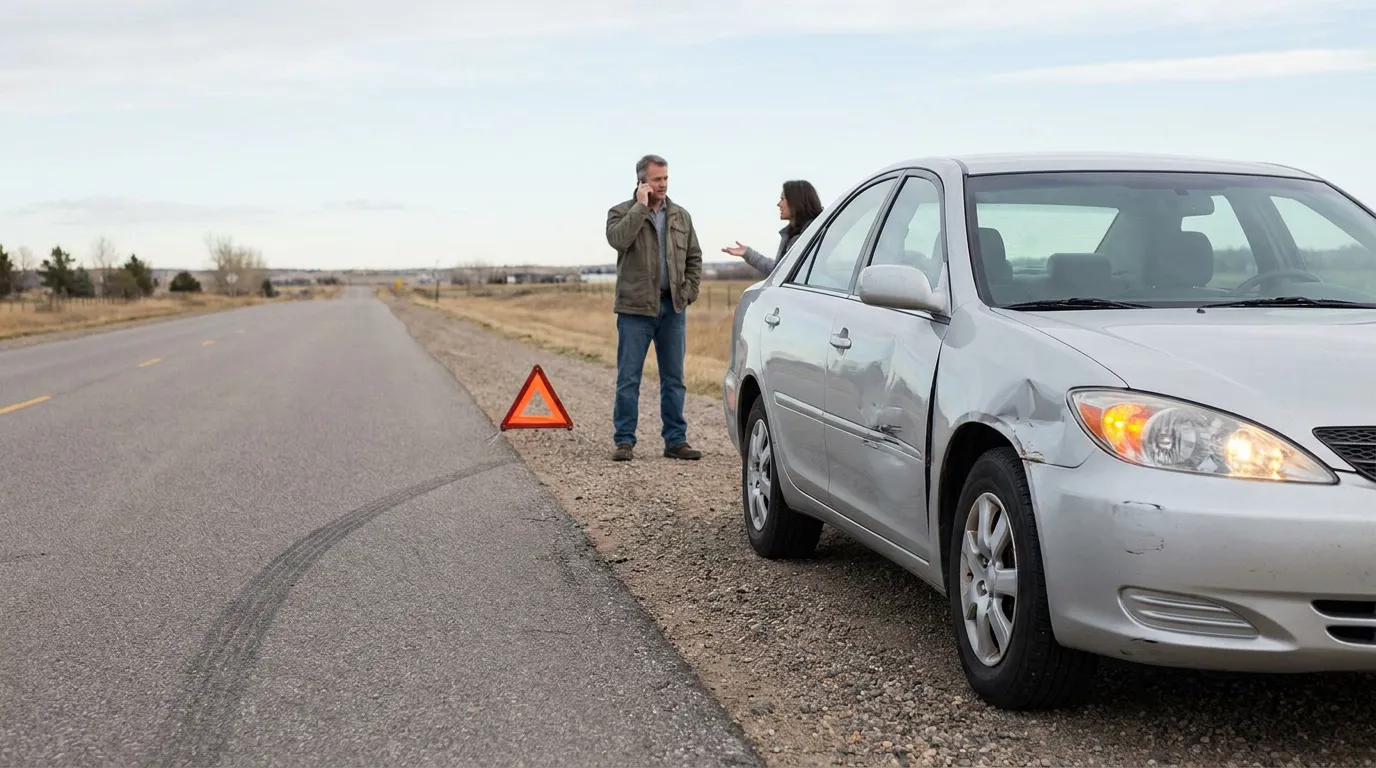
The official police report is often the first piece of evidence an attorney reviews after a car accident in Centennial. It typically includes the responding officer’s observations, a preliminary fault determination, citations issued, witness contact information, and a collision scene diagram. Photographs and video footage from the scene, dashcams, or nearby surveillance cameras can further corroborate or challenge the report’s findings. Our page on car accident cases in Denver explains how this evidence fits into the wider claim.
- Photographs of vehicle damage, skid marks, road conditions, and traffic signs
- Dashcam or surveillance footage capturing the moment of impact
- The police report’s narrative section and any citations issued
- Witness names and contact details listed in the report
- Weather and lighting records from the date and time of the crash
To learn more about who gathers this critical scene evidence, read about who investigates Centennial car accidents.
Medical Records and Billing Documentation
Medical evidence forms the foundation of your damages claim. Hospital records, diagnostic imaging, surgical notes, and rehabilitation documentation all help establish the nature and severity of your injuries. Equally important is how those medical expenses are presented at trial.
Colorado’s collateral source rule generally keeps the jury from hearing what other insurers paid. This means attorney must use billed medical expenses rather than the discounted amounts your health insurance actually paid. The court reduces the verdict by collateral source payments only after the jury returns its verdict. However, benefits paid under a contract entered into by or on behalf of the plaintiff, such as private health insurance premiums you personally paid, are generally exempt from that post-verdict reduction.
💡 Pro Tip: Keep every medical bill, receipt, and explanation of benefits (EOB). Even if your health insurance covers a portion, the full billed amount is what your attorney presents to the jury.
How an Attorney Proves Negligence in a Car Accident Claim
Establishing the Four Elements
Every car accident negligence claim requires proof of four elements: duty, breach, causation, and damages. In most Centennial collisions, every driver owes a duty of reasonable care to others. Breach occurs when a driver violates that duty by running a red light, texting while driving, or following too closely. Causation links that breach directly to the collision and your injuries. Damages encompass medical bills, lost wages, pain and suffering, and other measurable losses.
Building a car accident case in Denver and Centennial often involves layering multiple evidence types to satisfy each element. A police report may establish breach, medical records prove damages, and accident reconstruction analysis ties everything together through causation. When fault is disputed, the modified comparative negligence threshold makes evidence quality critical, because reaching 50 percent or more fault bars recovery entirely.
| Evidence Type | Element Supported | Common Sources |
|—|—|—|
| Police report and citations | Duty and breach | Law enforcement records |
| Photographs and video | Breach and causation | Scene photos, dashcams, surveillance |
| Medical records and bills | Damages and causation | Hospitals, physicians, therapists |
| Witness statements | Breach and causation | Bystanders, passengers |
| Federal crash and vehicle data | Causation and breach | NHTSA databases |
| Employment and wage records | Damages | Employers, tax returns |
💡 Pro Tip: If the other driver received a traffic citation at the scene, that citation can serve as strong evidence of breach, though it is not automatically conclusive in a civil claim.
Federal Crash Data and Vehicle Safety Records
Attorneys handling car accident claims in Centennial Colorado can draw on federal databases maintained by the National Highway Traffic Safety Administration (NHTSA) to strengthen a case. NHTSA’s crash data systems offer official federal crash statistics and causation information that may be relevant in litigation.
NHTSA’s recall and complaint databases allow attorney to identify known vehicle defects that may have contributed to an accident. If a brake system, airbag, or tire was subject to a federal recall at the time of the crash, that information can support a product liability theory alongside or in place of a standard negligence claim. NHTSA also publishes compliance test reports for Federal Motor Vehicle Safety Standards (FMVSS), which can demonstrate whether a specific vehicle met safety requirements at manufacture.
The Crash Injury Research and Engineering Network (CIREN) program offers another valuable resource. CIREN conducts in-depth crash investigations integrating engineering and medical evidence to determine injury causation. Its multidisciplinary approach, combining engineering, medicine, and related fields, mirrors the analysis attorney use when proving how specific crash forces led to injuries. CIREN teams systematically collect over 1,000 data elements per investigated crash, providing a detailed framework that can support claims.
Taking the Next Step After a Centennial Car Accident
Recovering from a car accident involves far more than healing physically. The evidence you collect and how it is presented under Colorado law directly shapes the compensation you may receive for medical bills, lost wages, and pain and suffering. From police reports and medical records to federal crash databases and Colorado’s collateral source statute, each piece of evidence plays a specific role in proving negligence and documenting your losses. An experienced Car Accident Attorney in Denver and Centennial can help you identify, preserve, and present this evidence effectively. When a claim turns on evidence like this, it helps that Dan Jacobs handles every case personally at Jacobs Law, from the first records request to the last negotiation.
If you are dealing with the aftermath of a collision in Centennial or anywhere in the Denver metro area, Jacobs Law is here to guide you through the process. Contact us now for a case evaluation.