Understanding Electronic Logging Devices and Their Role in Trucking Cases
Key Takeaways: ELD violations can strengthen a Centennial truck accident case when the data links a regulatory breach, such as exceeding federal hours-of-service limits, to the harm you suffered. Proving an hours-of-service violation can support a negligence or negligence-per-se theory and help establish breach of the standard of care under Colorado’s civil framework. ELD records track driving time, engine hours, and duty status with precision that proves driver fatigue and builds reliable timelines. This evidence can shift fault percentages under Colorado’s modified comparative negligence rule, which reduces recovery by your share of fault and bars it entirely if your fault equals or exceeds the defendant’s. Because ELD data can be overwritten and strict filing deadlines apply, prompt action to send a preservation letter and consult counsel is critical. When the facts align, this digital trail can meaningfully increase the fault assigned to a negligent carrier and open the door to recoverable damages.
Electronic logging devices, or ELDs, record what a commercial truck driver does behind the wheel, and that data can become powerful evidence after a crash. These federally mandated devices track driving time, engine hours, and movement to enforce hours-of-service limits designed to prevent fatigue. When a driver or carrier ignores those limits, the digital trail may reveal a violation that shifts how a collision happened.
If you were hurt in a crash involving a commercial truck, you do not have to untangle these records alone. The team at Jacobs Law helps injured Coloradans investigate trucking data, preserve evidence, and pursue full recovery. Call us at 303-529-4040 or reach out through our contact page to discuss your situation.
What ELD Data Actually Reveals After a Truck Crash
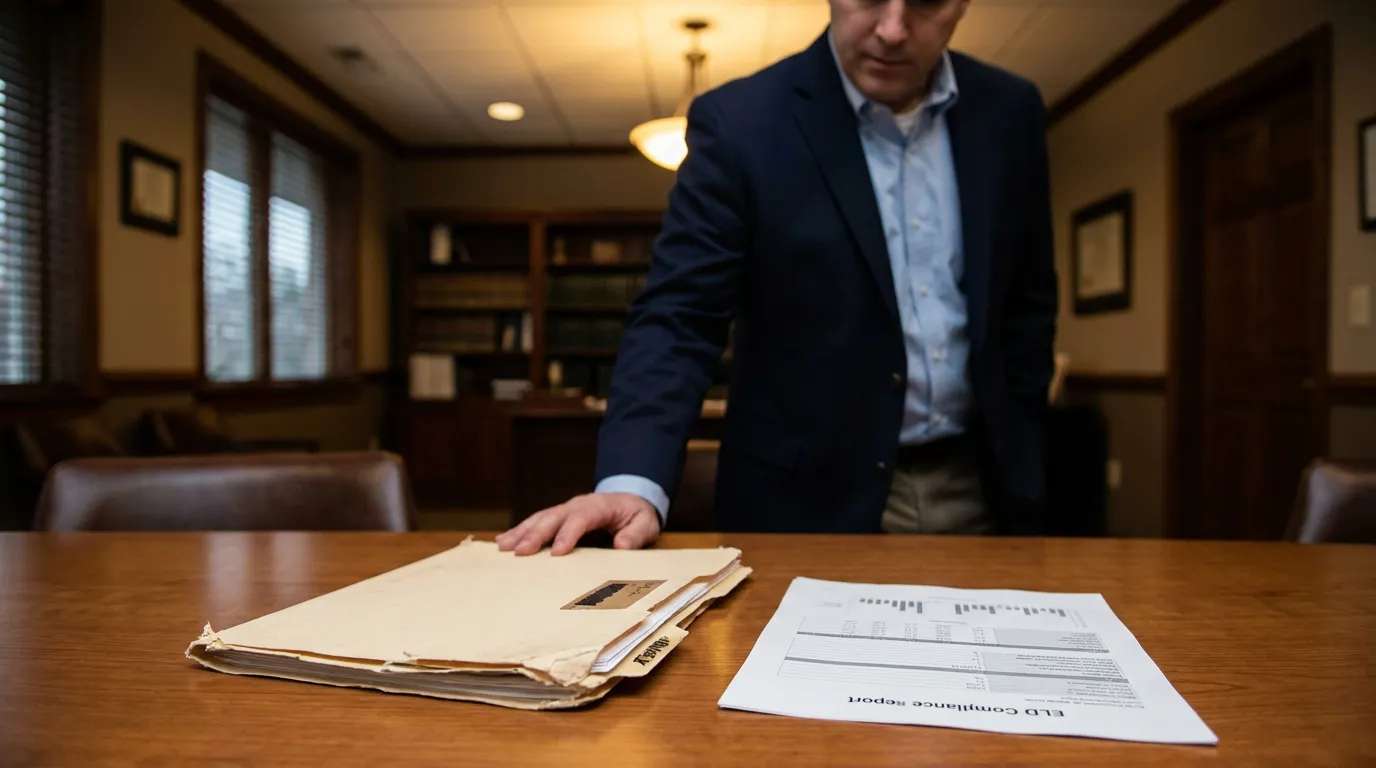
ELD data captures a driver’s on-duty and driving hours with precision that paper logs never offered. Because the device connects to the truck’s engine, it logs start and stop times, miles driven, and duty status changes automatically, making it harder for carriers to disguise a driver who stayed on the road too long.
In practical terms, this information helps prove truck driver fatigue in ways that testimony alone cannot. When ELD data truck crash records show a driver exceeded hours-of-service limits, that discrepancy can support an argument that the driver was fatigued or that the carrier pressured unsafe schedules. Electronic logging device evidence often works alongside dispatch logs, fuel receipts, and GPS records to build a consistent timeline.
- Total driving hours compared to federal daily and weekly limits
- Timing of required rest breaks and off-duty periods
- Engine-on and movement data that can contradict a driver’s account
- Edits or annotations that may suggest tampering or missing records
Can ELD Violations Strengthen Your Centennial Truck Accident Case
The short answer is yes, when the data connects a regulatory breach to the harm you suffered. A truck accident claim generally turns on negligence, so proving that a trucker or carrier violated federal hours-of-service rules can support a negligence or negligence-per-se theory. Under Colorado’s civil framework, that violation can help establish a breach of the standard of care when tied to the crash cause.
Colorado relies on official model jury instructions to guide how juries decide these disputes. The state’s pattern civil jury instructions address negligence concepts and motor-vehicle liability, which govern fault in vehicle-collision cases. As government-published model instructions rather than marketing material, they offer a reliable primary source for explaining what an injured person must prove.
How a Violation Ties Into Breach of Duty
A safety regulation violation does not automatically win a case, but it can be a persuasive building block. In many cases, an hours-of-service violation supports the argument that the driver failed to act as a reasonably careful trucker would. Whether it rises to negligence per se depends on whether the injured person is within the class the regulation was designed to protect and suffered the type of harm it was meant to prevent.
Why the Data Needs Prompt Attention
ELD records can be overwritten or lost if no one moves quickly to preserve them. Carriers are required to retain certain records for limited periods, and routine data can cycle out. Sending a preservation letter early is often critical in a truck accident case in Colorado.
💡 Pro Tip: Ask that a formal litigation hold be sent to the trucking company as soon as possible so that ELD, dispatch, and maintenance records are preserved before they are routinely purged.
How Colorado Negligence Rules Frame Your Claim
Colorado uses its Pattern Civil Jury Instructions to explain the elements a plaintiff must prove. The Colorado Judicial Branch maintains these instructions, including chapters on negligence concepts and motor vehicles. Establishing negligence, potentially bolstered by an ELD or hours-of-service violation, is what opens the door to recovering damages.
Those same instructions map out the categories of damages available in a serious crash. The damages chapter lists instructions covering personal injuries to adults and minors, loss of consortium, the "thin skull" doctrine, and aggravation of preexisting conditions.
Colorado also statutorily caps noneconomic damages in personal-injury cases. The damages instructions reference the limitations on damages for "noneconomic loss or injury" set forth in section 13-21-102.5, C.R.S. That statutory cap is adjusted for inflation and may be exceeded only in limited circumstances where clear and convincing evidence justifies a higher award.
Comparative Negligence and Why Fault Percentages Matter
Colorado follows a modified comparative negligence rule, so the percentage of fault assigned to each party can decide how much you recover. Under the comparative negligence statute, § 13-21-111, C.R.S., and the pro rata liability statute, § 13-21-111.5, C.R.S., a plaintiff’s recovery is reduced by their share of fault, and in cases with multiple defendants each is generally liable only for its own proportionate share.
The rule includes an important threshold. A plaintiff’s recovery is reduced by their own percentage of fault and is barred entirely if their negligence is as great as or greater than the negligence of the party from whom they seek recovery. This is where proving greater fault on the trucking side, potentially supported by ELD violations, can directly affect whether and how much you recover.
Comparative negligence is a tort principle applied to reduce damages based on each party’s contribution. As the legal reference source Wex on comparative negligence explains, courts reduce recovery according to the degree of negligence each party contributed to the incident. For example, if a court assigns 60% of the fault to a defendant, the plaintiff may recover only 60% of the damages.
| Fault Allocation | General Effect on Recovery in Colorado |
|---|---|
| Plaintiff less than 50% at fault | Recovery reduced by plaintiff’s percentage |
| Plaintiff 50% or more at fault | Recovery generally barred |
| Defendant’s fault increased by ELD evidence | May raise the recoverable share |
Deadlines and Timing You Cannot Afford to Ignore
Every truck accident case in Colorado is subject to a filing deadline, and missing it can end a claim before it begins. Colorado’s statutes of limitations set how long a claimant has to file suit, and those deadlines are generally strict.
Some doctrines can adjust the timeline, but only in limited circumstances. According to the Colorado Legislative Council Staff, statutes of limitations involve factors that impact length, such as statutes of repose and tolling. Tolling or a discovery rule may apply when evidence like an ELD violation surfaces later, but these exceptions are not automatic.
It is also important to distinguish civil deadlines from other claim deadlines. A civil statute of limitations governs your lawsuit, while government administrative claim deadlines operate separately and often run on a shorter schedule. If you have questions about which deadline applies, consult a lawyer promptly.
Frequently Asked Questions
1. Does an ELD violation guarantee that I will win my case?
No. An ELD violation can support a negligence argument, but you still must prove duty, breach, causation, and damages. Outcomes depend on the specific facts and evidence developed.
2. What if I was partly at fault for the crash?
You may still recover under Colorado’s modified comparative negligence rule. Your recovery is reduced by your percentage of fault and is barred only if your fault is as great as or greater than that of the party you are suing. Strong evidence of trucking negligence in Centennial can help keep your share low.
3. How quickly does ELD data need to be preserved?
As soon as possible, because routine records can be overwritten. A prompt preservation demand helps protect electronic logging device evidence before it cycles out. Early action by a Centennial truck crash lawyer can make a meaningful difference.
4. Are damages in a Colorado truck accident case limited?
Noneconomic damages are subject to a statutory cap under section 13-21-102.5, C.R.S. Economic damages such as medical bills and lost wages follow different rules. A fact-specific review is needed to estimate potential recovery.
5. Can families of someone who died in a truck crash bring a claim?
Colorado law recognizes wrongful death claims that may be available to certain family members, subject to strict deadlines and eligibility rules. These claims are fact-dependent and involve their own procedural requirements. Speaking with counsel early helps protect those rights.
Bringing the Pieces Together for Your Recovery
When the facts line up, ELD violations can strengthen your Centennial truck accident case by tying a regulatory breach to the harm you experienced. The data can support a negligence theory, shift fault percentages under Colorado’s comparative negligence statutes, and open the door to damages recognized in the state’s model jury instructions. Because these matters are fact-sensitive and deadline-driven, acting early to preserve evidence is often the difference between a strong claim and a lost opportunity. If you are weighing related collision issues, a knowledgeable Centennial truck accident attorney can help you understand how these rules apply to your circumstances.
You do not have to face a trucking company and its insurer on your own. The team at Jacobs Law is ready to investigate ELD violations in Centennial and fight for your recovery. Call 303-529-4040 today or contact our office online to discuss how we can help protect your rights.