How an Unbuckled Seat Belt Can Affect Your Uber Injury Claim in Centennial
Key Takeaways: Colorado’s seat belt defense under C.R.S. § 42-4-237(7) allows rideshare insurers to introduce evidence of seat belt non-use, but only to mitigate pain and suffering damages. Medical payments, lost wages, and other economic losses remain fully recoverable. The belt duty applies to drivers and front-seat passengers, with the Colorado Supreme Court’s decision in Carlson v. Ferris defining which seat positions the statute reaches. Non-use is treated as a confined damages issue rather than comparative negligence. Statutory exemptions, including physician-certified disabling conditions and vehicles not federally required to have belts, may defeat the defense entirely. For most injured Uber riders, the driver’s on-trip status, applicable insurance layer, and filing deadline matter more to claim value than whether they buckled up.
If you were hurt as a passenger in a rideshare crash without wearing a seat belt, Colorado law allows the defense to raise that fact, but only narrowly. Under C.R.S. § 42-4-237(7), evidence of belt non-compliance is admissible to mitigate damages, limited to pain and suffering awards. It cannot reduce recovery of economic loss and medical payments. A rideshare insurer may argue for reduced noneconomic damages, but your medical bills and lost wages generally remain fully recoverable.
Understanding this distinction early can change how you document and present your claim. The team at Jacobs Law handles rideshare injury matters throughout the Denver and Centennial area. Call 303-529-4040 or reach out to our team now to discuss what happened.
What the Colorado Seat Belt Statute Actually Requires
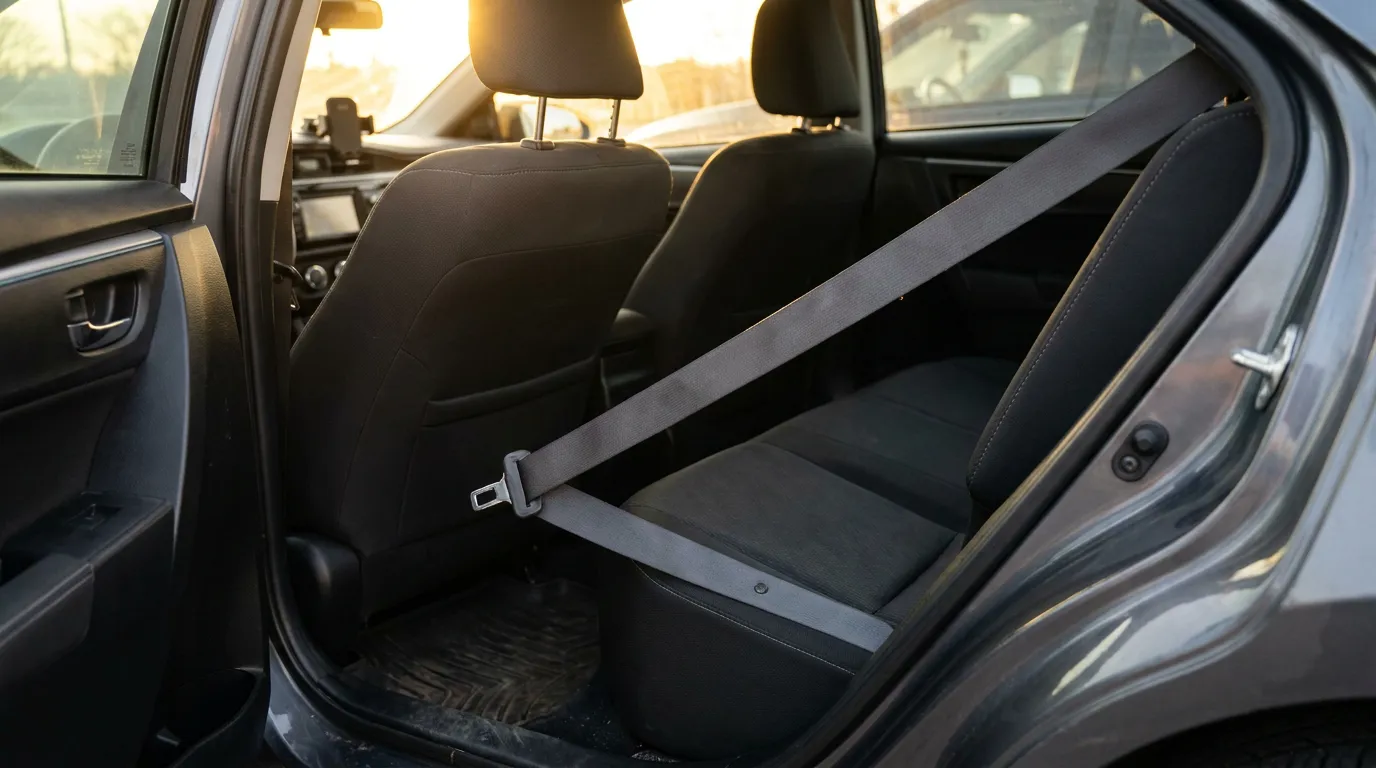
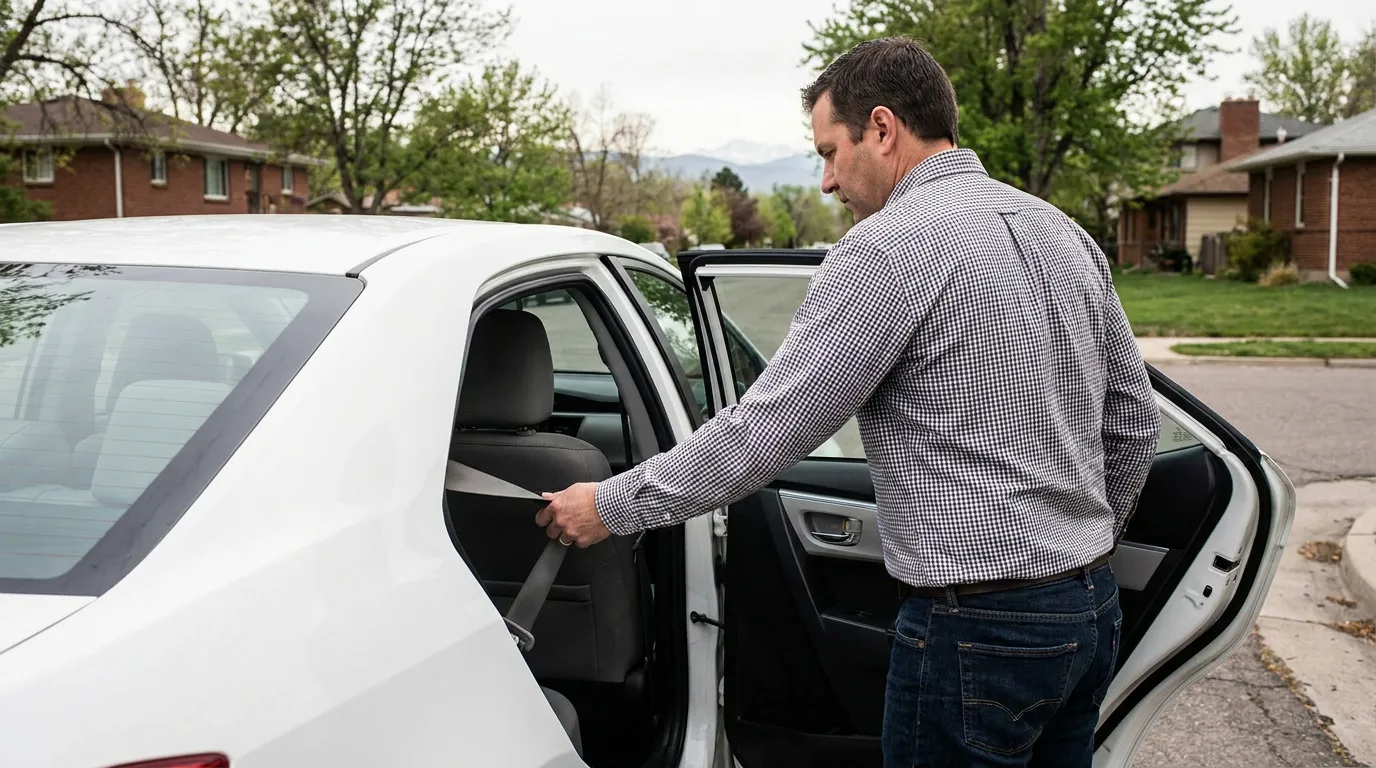
Colorado’s occupant restraint statute imposes a duty on the driver and every front-seat passenger to wear a seat belt whenever the vehicle is operated on a street or highway. That duty applies to an Uber rider seated in the front seat. Adult riders in the back seat are generally outside that front-seat duty, although separate provisions govern occupants under 16, so an adult back-seat rider often has a strong argument that the defense does not apply.
The Colorado Supreme Court construed key terms in Carlson v. Ferris, 85 P.3d 504 (Colo. 2003), distinguishing a "safety belt system" (all belts installed for drivers and front-seat occupants) from a "safety belt" in subsection (2) (belts at a particular seat). That distinction becomes relevant when parties dispute which seat positions the statute reaches.
Violations Are Minor and Secondarily Enforced
A belt violation carries far less weight in traffic court than insurers suggest it should in civil cases. Under § 42-4-237(4)(a), the violation is only a class B traffic infraction, and § 42-4-237(5) makes it secondary-enforcement for adults, meaning officers generally cannot issue belt citations unless the vehicle was stopped for another violation. Colorado’s secondary seat belt enforcement materials note the modest fine attached to the infraction.
That enforcement posture differs from the civil damage-reduction consequence in subsection (7). A jury may hear about non-use for mitigation purposes even where no citation was issued.
The Colorado Seat Belt Defense 42-4-237 Uber Passenger Claims Face
The defense functions as a limited damages-reduction tool, not a general finding that you caused your crash. Colorado’s pattern civil jury instructions require damages separated into economic and noneconomic categories. CJI-Civil Chapter 6 includes special interrogatories directing juries to determine amounts for economic and noneconomic losses and for physical impairment or disfigurement. Because the statute reaches only pain and suffering, that separation keeps the reduction confined. Reviewing the Colorado civil jury instructions illustrates how verdict forms separate these figures.
Non-Use Is Not the Same as Comparative Negligence
Seat belt non-use is generally not folded into Colorado’s comparative fault analysis. Comparative negligence under § 13-21-111 and pro rata liability under § 13-21-111.5 are handled through separate Chapter 9 instructions. That structural separation explains why a rider’s non-use is handled as a confined damages issue rather than an allocation of fault for causing the collision.
The practical consequence matters. An insurer characterizing an unbelted passenger as partly responsible for the crash itself may be overstating what the seat belt statute permits.
| Category of Damages | Can § 42-4-237(7) Reduce It? |
|---|---|
| Medical expenses | No, expressly excluded |
| Lost wages and economic loss | No, expressly excluded |
| Pain and suffering | Yes, mitigation permitted |
Statutory Exemptions That May Defeat the Defense
Several statutory exemptions can take the belt argument off the table entirely. Section 42-4-237(3)(a) through (f) lists exemptions including individuals with physician-certified disabling conditions and occupants of vehicles that federal law does not require to be equipped with safety belt systems.
For injured riders, these exemptions can be meaningful defenses. Whether an exemption applies is ordinarily decided by the court, so documentation matters more than argument. A treating physician’s records establishing a qualifying condition can be significant.
- Medical or psychological conditions certified by a physician
- Vehicles not federally required to carry belt systems
- Child occupants governed by the separate child restraint statute
- Seat positions not covered under the statutory definitions discussed in Carlson
💡 Pro Tip: If you have a documented condition affecting restraint use, ask your provider to note it in the chart before litigation begins rather than after an insurer raises the issue.
Why Insurance Layers Matter More Than the Belt Argument
The coverage available in a rideshare crash often dwarfs the amount at stake in a belt dispute. Colorado is a fault-based state requiring vehicle owners to carry liability insurance. Understanding mandatory auto insurance in Colorado helps riders see what layer their claim may draw from.
State minimum limits are $25,000 per person for bodily injury or death, $50,000 per accident, and $15,000 for property damage. Those minimums sit far below the $1 million liability coverage transportation network companies are generally required to maintain while a passenger is in the vehicle. Because the belt defense reaches only part of one damages category, the driver’s on-trip status frequently has a larger effect on claim value than whether you buckled up. For a broader overview, our discussion of the rights of injured passengers covers related ground.
Evidence That Helps Rebut a Mitigation Argument
Preserving the right records early may give you a stronger response to a belt-based reduction argument. Ride logs confirming trip status, the crash report, photographs of the vehicle interior and restraint hardware, and medical records describing injury mechanism all may bear on whether non-use actually affected the injuries claimed. Colorado courts have held that a defendant presenting competent evidence of non-use may be entitled to the instruction even with limited proof of a causal link, so the practical work is often persuading the jury that non-use did not cause the injuries claimed.
Witness statements from other occupants can also matter, particularly where parties dispute seat position. A Colorado seat belt defense 42-4-237 Uber passenger lawyer can help evaluate which records may carry weight.
Deadlines That Apply Regardless of the Belt Issue
A mitigation argument may matter little if the filing deadline passes first. Most Colorado injury claims from motor vehicle use, including an Uber passenger’s claim, must be filed within three years under § 13-80-101(1)(n), rather than the two-year period for most other negligence claims. The Legislative Council Staff memo on Colorado statutes of limitations compiles various civil and criminal deadlines statewide.
Tolling and delayed-discovery principles may apply in limited circumstances, such as claims involving minors or injuries not reasonably discoverable at the crash, and wrongful death claims are generally subject to a shorter two-year period. Courts interpret these exceptions narrowly, and none applies automatically. Claims involving governmental entities are subject to the Colorado Governmental Immunity Act’s written notice requirement, generally within 182 days of discovery of injury.
💡 Pro Tip: Calendar your deadline from the crash date and treat any potential extension as unavailable unless an attorney confirms otherwise in writing.
Frequently Asked Questions
1. Does not wearing a seat belt bar my Uber injury claim in Colorado?
Generally, no. Under § 42-4-237(7), non-use is admissible only to mitigate damages, limited to pain and suffering awards. Your economic losses and medical payments are generally not reduced.
2. Does the statute apply to back-seat Uber riders?
The statutory duty applies to the driver and front-seat passengers, so an adult riding unbelted in the back seat generally falls outside it. Whether a particular seating position falls within the defense depends on definitional distinctions the Colorado Supreme Court drew in Carlson v. Ferris and on separate rules for occupants under 16.
3. Can I be ticketed for riding unbelted in an Uber?
Adult belt violations are secondary offenses under § 42-4-237(5), meaning a citation generally requires a stop for another violation. The infraction is a class B traffic infraction, separate from the civil consequence.
4. What if a medical condition prevented me from wearing a belt?
Section 42-4-237(3) exempts individuals with a physician-certified disabling condition. Whether the exemption applies is ordinarily a question for the court, and contemporaneous medical documentation supporting the diagnosis is generally viewed as strong evidence.
5. How much can a noneconomic damages reduction cost me?
There is no fixed percentage or statutory cap on the reduction. Juries and adjusters weigh the evidence connecting non-use to specific injuries, and outcomes vary based on crash mechanics and medical proof.
Protecting the Full Value of Your Rideshare Claim
Colorado’s seat belt defense is real but narrow. It may permit a noneconomic damages reduction where evidence supports it, generally leaves economic recovery untouched, carries statutory exemptions that may defeat it outright, and generally operates separately from comparative negligence. For injured riders, the more consequential questions are often the driver’s trip status, the applicable insurance layer, and whether the claim is filed on time.
If a rideshare insurer has raised your seat belt use to justify a lower offer, the attorney at Jacobs Law can review the record with you. Call 303-529-4040 or schedule a consultation today to talk through your options.
Disclaimer: This content is for informational purposes only and is not legal advice. Every case is unique, and results may vary. Consult an attorney about your specific circumstances.