When a Hospital Claims Part of Your Car Accident Settlement
Key Takeaways: A hospital lien under Colorado’s C.R.S. § 38-27-101 is a statutory claim by a state-licensed hospital against your settlement or judgment proceeds from the party who injured you, not against your home, wages, or bank account. Hospitals must first bill any identified property and casualty insurer and primary medical payer; liens may only be created when no payer is identified. "Payer of benefits" includes private insurers, HMOs, PPOs, employee benefit plans, and Colorado medical assistance programs. Your attorney’s lien is senior to the hospital’s, and post-settlement charges fall outside Article 27. If a lien is filed improperly, you may sue for twice the amount asserted. Work-related injuries covered by Workers’ Compensation are excluded. HB21-1300 created Article 27.5 for health-care provider liens, including charge limits, disclosure duties, and protections limiting liability beyond your net recovery.
A hospital lien is a legal claim a licensed Colorado hospital may assert against money you recover from the driver who injured you. Under C.R.S. § 38-27-101, a hospital "duly licensed by the department of public health and environment" may claim reasonable and necessary charges for care furnished to a person injured by another’s "negligence or other wrongful acts." The lien attaches to the net amount payable from a judgment, settlement, or compromise, not your house, paycheck, or bank account.
If a hospital in the Centennial area has filed a notice against your injury claim, the team at Jacobs Law reviews lien notices for validity, priority, and statutory compliance. Call 303-529-4040 or contact us now to discuss your situation.
The Hospital Lien Definition Colorado Law Actually Uses
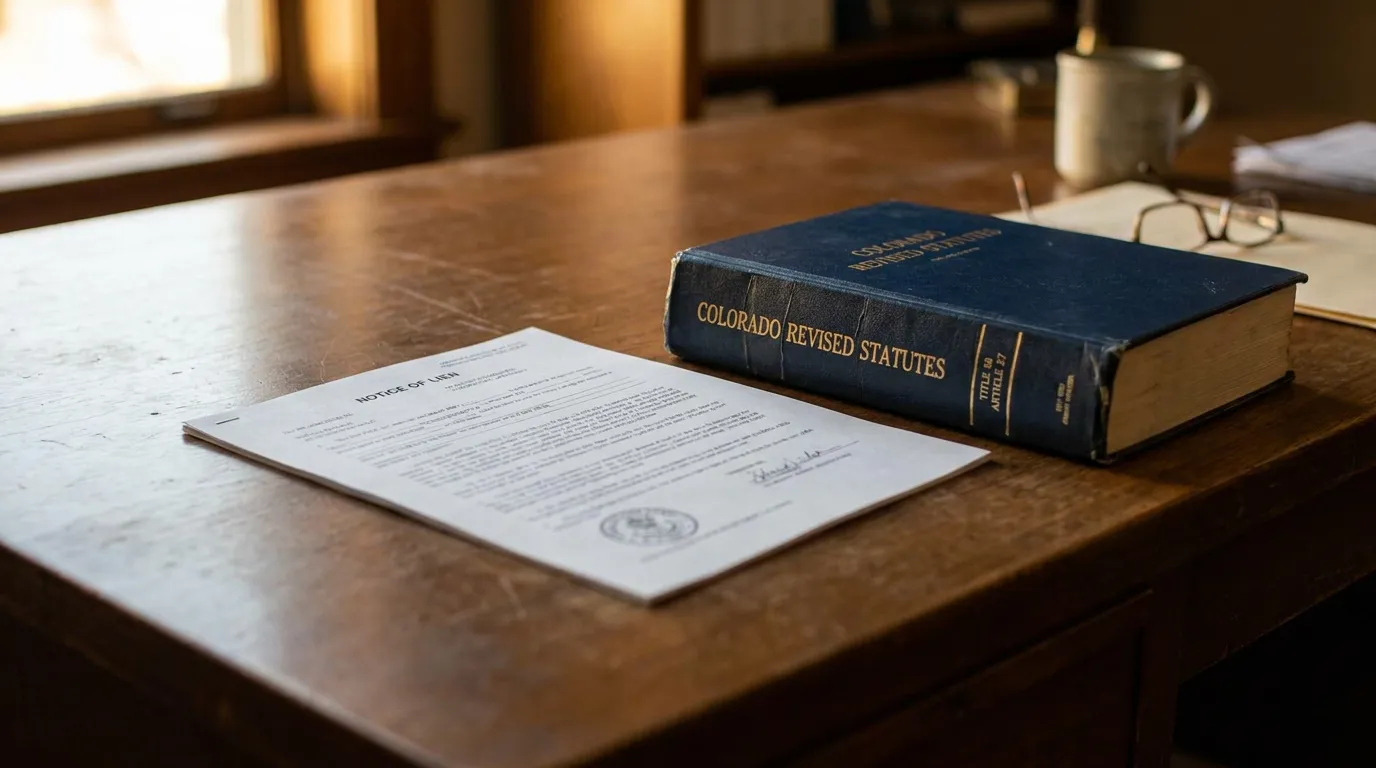
A hospital lien is not a bill or lawsuit against you personally. It is a statutory claim against a specific pool of money: the recovery you may obtain from the at-fault party or an uninsured motorist claim. This distinction matters because a valid lien affects settlement distribution rather than exposing your other assets to collection.
The Colorado lien statute narrows who may use it. Only a hospital licensed by the state health department under part 1 of article 3 of title 25 qualifies, and services must relate to injuries caused by another party’s negligence or wrongful act. The operative rules live in C.R.S. § 38-27-101.
Billing Must Come First Under the Colorado Hospital Lien 38-27-101 Rules
Before any lien exists, the hospital must try to get paid the ordinary way. Under C.R.S. § 38-27-101(1), a licensed Colorado hospital treating someone injured by another’s negligence must submit all reasonable and necessary charges to the property and casualty insurer and primary medical payer available to and identified by or on behalf of the injured person. You can review the Colorado hospital lien statute to see the billing sequence.
A lien may only be created if no payers of benefits are identified due to lack of insurance. If a payer is identified after a lien is created, C.R.S. § 38-27-101(2)-(3) requires the hospital to make good-faith attempts to bill that payer. Some liens fail when health coverage exists but was never located or billed correctly during admission.
Who Counts as a "Payer of Benefits"
The definition is deliberately broad. Under C.R.S. § 38-27-101(9), a payer of benefits includes insurers, health maintenance organizations, health benefit plans, preferred provider organizations, employee benefit plans, and Colorado medical assistance programs. If any of these applied to your care, the hospital’s path to a lien may narrow considerably.
- Private health insurance and employer-sponsored plans
- HMOs and PPO network arrangements
- Colorado medical assistance programs
- Medical payments coverage and property and casualty insurers identified at intake
What a Lien on Settlement Proceeds Can and Cannot Reach
The lien attaches to the net amount payable to the injured person. C.R.S. § 38-27-101(4) frames the lien in terms of judgment, settlement, or compromise proceeds, not the patient’s general assets. Understanding this limit may relieve anxiety for people facing Colorado medical debt after a serious collision.
Priority may also favor the injured person. Under C.R.S. § 38-27-101(8), the attorney’s lien authorized by C.R.S. § 13-93-114 takes precedence over and is senior to a hospital lien. That subsection also provides Article 27 does not cover hospital charges incurred after the date of judgment, settlement, or compromise. Questions about which bills belong in the claim often overlap with who pays medical bills after a crash.
| Issue | General Rule Under Article 27 |
|---|---|
| What the lien reaches | Net recovery payable to the injured person |
| Billing prerequisite | Charges submitted to identified payers first |
| Attorney lien priority | Senior to the hospital lien |
| Post-settlement charges | Not covered by Article 27 |
| Improper lien remedy | Suit for twice the amount asserted |
💡 Pro Tip: Ask the hospital in writing whether it billed your health plan before filing. The answer may become important evidence later.
The Remedy When a Centennial Hospital Lien Is Filed Improperly
Colorado does not treat an improper lien as a harmless paperwork error. C.R.S. § 38-27-101(7) provides that an injured person subjected to a lien filed in violation of the statute may bring an action in district court to recover two times the amount of the lien asserted. Whether a particular filing violated the statute is a fact-dependent question a court would decide.
Providers may pursue liens partly because direct patient billing is sometimes restricted. C.R.S. § 38-27-101(5) states nothing in the section authorizes a hospital to collect money from a person where prohibited by C.R.S. §§ 8-42-101(4), 8-43-207(1)(o), or 10-16-705(3), and Colorado authorities have penalized providers for improper collection efforts against injured patients in the workers’ compensation context.
Work-Related Injuries Sit Outside the Statute
Section 38-27-101(1) applies to services not covered by the Workers’ Compensation Act of Colorado. That exclusion is a hard limit. If your treatment was covered as a compensable work injury, a hospital generally cannot use this statute to reach your third-party recovery, although coordination between comp and liability claims raises separate issues depending on the facts, including an employer’s or insurer’s subrogation rights.
How HB21-1300 Changed the Injury Claim Lien Landscape
In 2021, Colorado enacted a separate framework for provider liens. The HB21-1300 provider lien law added Article 27.5 to Title 38, establishing requirements for creating and assigning a health-care provider lien asserted against money an injured person may receive from a personal injury or uninsured or underinsured motorist claim. The bill took effect September 7, 2021. Article 27.5 governs health-care provider liens and does not change the hospital lien statute; § 38-27.5-106 expressly states it has no impact on hospital liens.
The act limits what a provider lien may include. A health-care provider lien generally cannot include additional finance charges or interest and is limited to the provider’s usual and customary billed charges. That ceiling may make a real difference in settlement outcomes.
Disclosures, Filing, and Priority
Providers face disclosure obligations under the 2021 framework. Before creating a health-care provider lien, the provider or assignee must disclose payment options including use of benefits available from a payer of benefits, how any assignee is compensated, and common ownership among lien holders, providers, or the injured person’s counsel. Where a court finds knowing noncompliance, it may disallow all or part of the lien.
Priority is established by filing under the Colorado Statutory Lien Registration Act. Filed liens outrank unfiled ones, and among filed liens, the earliest filing date takes priority. The statute also builds in patient protections: except in cases of fraud or misrepresentation, no liability if there is no recovery, and no liability beyond the net judgment, settlement, or payment when it is less than the lien.
💡 Pro Tip: Keep every itemized statement and explanation of benefits. Comparing them may reveal charges that were never routed to an available payer.
Practical Steps for Injured Drivers Facing a Medical Lien in Colorado
Documentation can be your leverage. Request an itemized bill, the lien notice, and confirmation of which payers were billed and when. An experienced colorado hospital lien 38-27-101 lawyer can evaluate whether the statutory prerequisites were satisfied.
Do not assume a filed lien is valid. Hospitals sometimes file quickly to preserve a position, and validity may hinge on whether the billing sequence in subsections (1) through (3) was followed. Courts may consider the timing, the payers identified, and the good-faith billing efforts made after coverage was discovered.
Frequently Asked Questions
1. Can a hospital take my house or wages under a hospital lien?
No. The lien described in C.R.S. § 38-27-101(4) attaches to the net amount payable from a judgment, settlement, or compromise rather than your other property. Separate collection actions on the underlying debt raise different legal questions.
2. What if I never recover anything from the at-fault driver?
Under the Article 27.5 health-care provider lien framework created by HB21-1300, an injured person generally has no liability if there is no judgment, settlement, or payment, and no liability beyond the net recovery when that recovery is less than the lien.
3. Does my attorney get paid before the hospital?
C.R.S. § 38-27-101(8) provides that the attorney’s lien under C.R.S. § 13-93-114 takes precedence over and is senior to a hospital lien. How that plays out depends on the facts and any agreement terms.
4. My hospital bill was for a work injury. Does this statute apply?
The statute applies to services not covered by the Workers’ Compensation Act of Colorado. Care covered under that Act generally falls outside section 38-27-101, though related third-party claims may involve other lien or subrogation rights.
5. What can I do if the lien was filed in violation of the statute?
C.R.S. § 38-27-101(7) permits an action in district court to recover two times the amount asserted. Whether a violation occurred is a question a court would resolve on the specific record.
Protecting Your Recovery From Improper Liens
Hospital liens are a narrow statutory tool, not a blank check. The colorado hospital lien 38-27-101 framework requires licensed status, third-party negligence, a billing sequence that puts identified payers first, and a lien limited to your net recovery. HB21-1300’s Article 27.5 adds charge limits, disclosure duties, filing-based priority, and protections for injured patients. The answer in your case will turn on your specific records and timeline.
If you were hurt in a Centennial collision and a lien notice arrived before you understood it, reach out to Jacobs Law for a review of your options. Call 303-529-4040 or schedule your consultation today.
Disclaimer: This content is for informational purposes only and is not legal advice. Every case is unique, and results may vary. Consult an attorney about your specific circumstances.