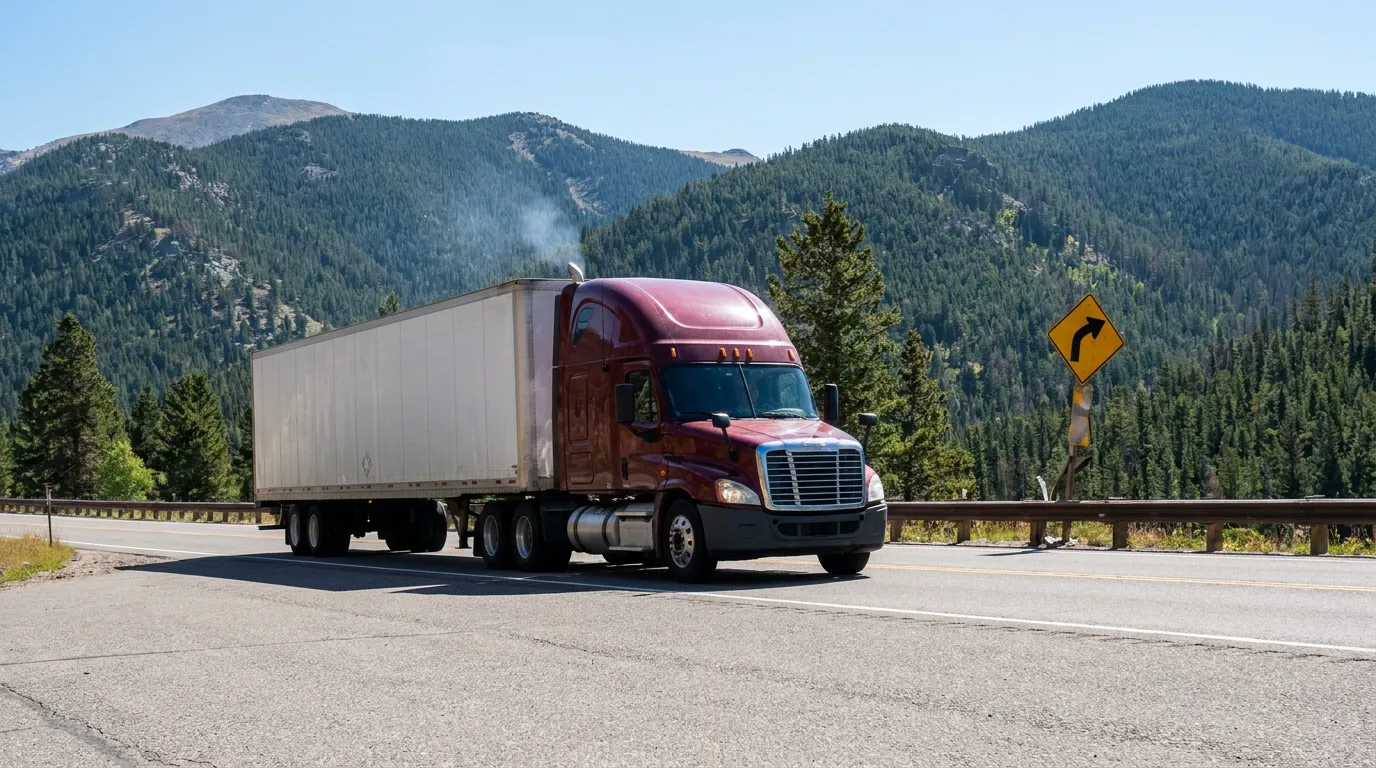
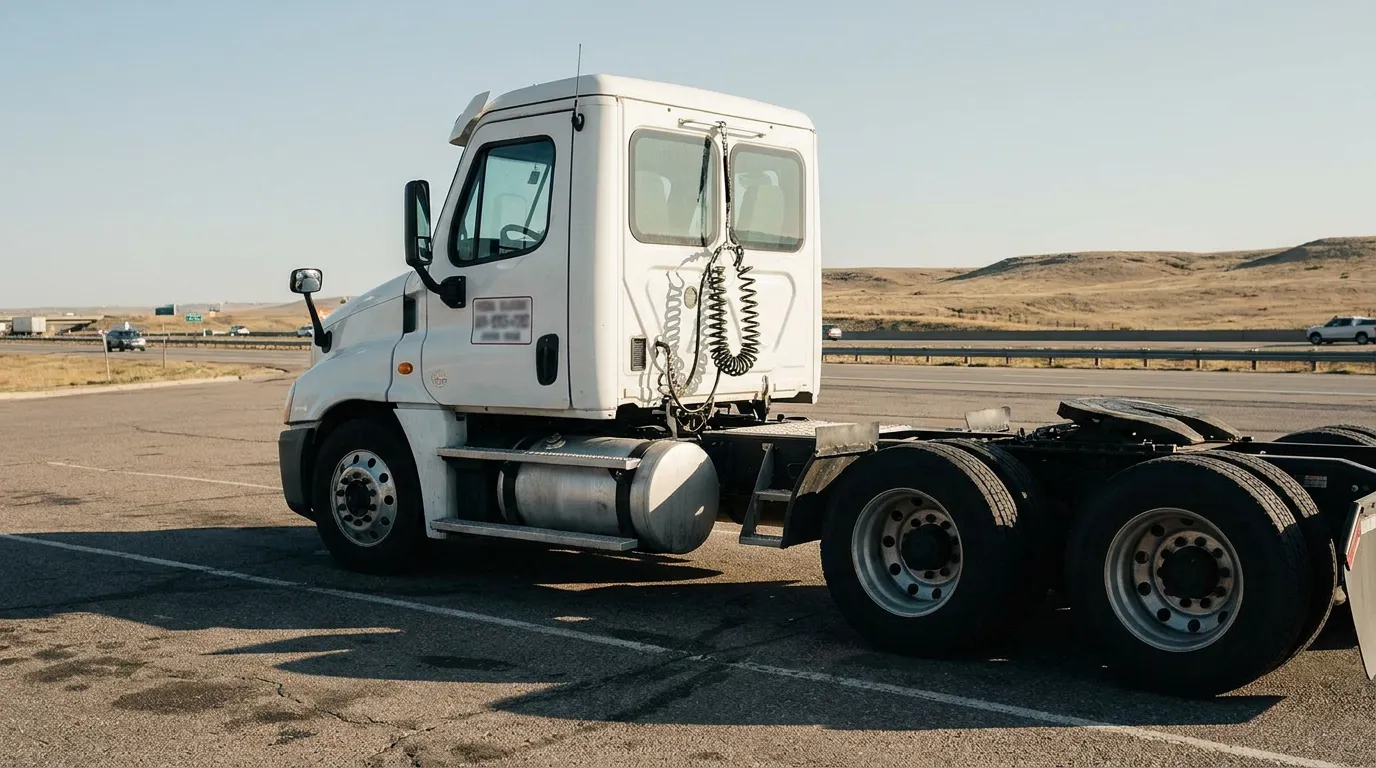
When Cargo Moves, Trucks Roll: Building Proof After a Centennial Crash
Key Takeaways: Proving a shifting load caused a Centennial truck rollover generally requires linking three elements: physical evidence that cargo moved, documentation of how the freight was loaded and secured, and a statutory or regulatory violation suggesting the carrier fell below the standard of care. Colorado’s load securement statute, C.R.S. § 42-4-1407, imposes an independent duty and, for certain loads, treats compliance with the federal cargo securement rules at 49 CFR parts 392 and 393 as one route to compliance, giving engineers measurable standards to test a defendant’s conduct against. Key proof may come from bills of lading, driver inspection reports, ECM "black box" data, scale tickets, dashcam footage, and scene photographs showing final cargo position and broken tiedowns. Because cargo shift proof is often circumstantial, reconstructionists may use tire marks, scuff patterns, and freight resting positions to help establish where the center of gravity was at roll initiation. Liability may extend beyond the driver to the motor carrier, shipper, or third-party loading facility, and motor vehicle tort claims in Colorado generally carry a three-year deadline under C.R.S. § 13-80-101(1)(n). One of the greatest risks is delay, since trailers are often repaired, cargo is hauled away, and electronic data can be overwritten within days unless a preservation letter goes out immediately.
Proving that a shifting load caused a truck rollover generally comes down to connecting three things: physical evidence that cargo moved inside the trailer, documentation showing how it was loaded and secured, and a statutory or regulatory violation that may help establish the carrier fell below the required standard of care. Colorado law may treat improper loading as a violation of specific securement duties, and when that violation causes a rollover on I-25, Arapahoe Road, or a Centennial surface street, it can form the backbone of a negligence claim.
If a shifting load truck rollover left you or a family member seriously injured, the evidence that may prove your case is often erased within days. Trailers get unloaded, cargo gets hauled away, and repair work can destroy the physical record of how the freight was stacked. Jacobs Law works with injured Coloradans to preserve that proof quickly. Call 303-529-4040 or contact us now to discuss your situation.
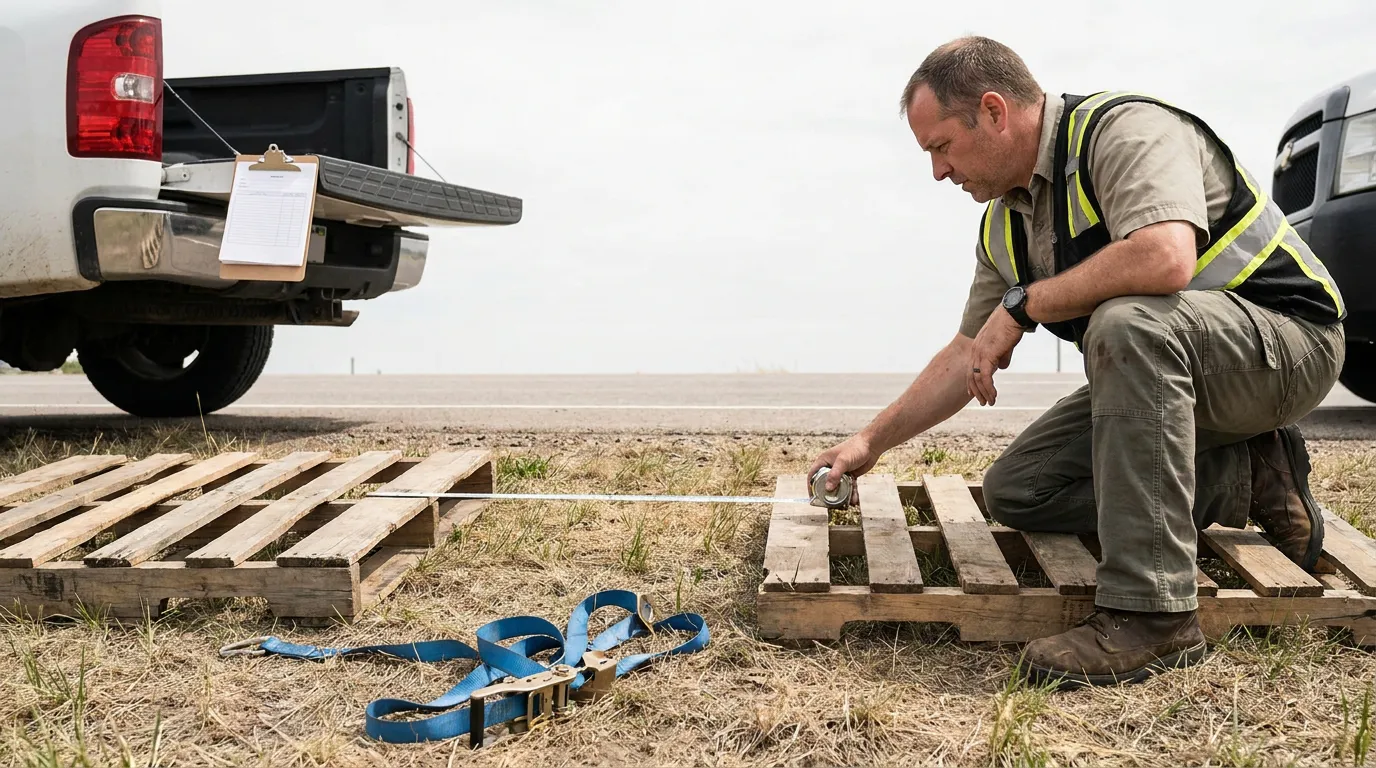
Why Cargo Shifts Cause Rollovers in the First Place
A loaded tractor-trailer is a top-heavy machine, and physics does the rest. Federal safety researchers recognize that vehicles with a higher center of gravity relative to their track width are more susceptible to rolling over, a principle that may apply with particular force to trucks carrying tall or dense freight. When cargo slides laterally during a turn or lane change, the center of gravity moves with it, and the truck’s rollover threshold can drop.
This is not theoretical. NHTSA conducts ongoing rollover resistance research, including stability testing measuring how vehicle design and loading affect rollover propensity. Metrics like the Static Stability Factor can help explain why an improperly blocked or braced load can turn an ordinary maneuver into a catastrophic crash. These metrics were developed primarily for passenger vehicles, so an expert typically must explain how the principles translate to a specific tractor-trailer configuration.
The Loading Decisions That Create Risk
Most cargo shift cases trace back to a handful of preventable choices, including:
- Uneven cargo weight distribution placing too much mass high or to one side
- Too few tiedowns, or tiedowns rated below the weight of the freight
- Missing blocking, bracing, dunnage, or load bars between pallets
- Partially filled liquid tankers where product surges during braking or turning
- Freight reloaded mid-route without re-inspecting securement
Each of these is often documented somewhere. Bills of lading, loading dock records, shipper instructions, and driver inspection reports may leave a trail, which is why early preservation letters can matter so much.
Colorado’s Load Securement Statute and Why It Anchors Liability
Colorado does not leave cargo securement to industry custom. Under C.R.S. § 42-4-1407(1), no vehicle may be driven unless it is constructed or loaded, or its load securely covered, to prevent any part from blowing, dropping, sifting, leaking, or otherwise escaping. That duty generally exists independently of the carrier’s internal policies. The section is directed principally at material escaping the vehicle, so in a pure internal-shift case the federal securement rules often carry more analytical weight than the state statute.
The statute goes further for certain loads. C.R.S. § 42-4-1407(2.4)(a) addresses loads of trash or recyclables and identifies "shifting" among the failure modes the securement requirements are meant to prevent, providing that one route to compliance is following the federal cargo securement rules at 49 CFR parts 392 and 393. That cross-reference matters because those federal rules set specific working load limits, tiedown counts, and commodity-specific requirements a retained engineer may measure a defendant’s conduct against. For interstate commercial carriers, those federal regulations generally apply directly and independently of the state statute.
Violations can carry real consequences under the Colorado load securement statute. C.R.S. § 42-4-1407(3)(c) provides that a person who violates the section while driving a car or pickup truck and thereby proximately causes bodily injury commits a class 2 misdemeanor traffic offense. That enhanced penalty is limited to cars and pickup trucks, so a tractor-trailer driver more likely faces a traffic infraction, along with potential federal out-of-service violations and CSA consequences for the carrier. Under C.R.S. § 42-4-1713, a conviction record for a violation of C.R.S. § 42-4-1407 is generally inadmissible as evidence in a Colorado civil action; however, the underlying conduct and the statute itself may still support a negligence per se theory, and witnesses may testify about what they observed. Colorado courts evaluating negligence per se look at whether the plaintiff falls within the protected class and whether the injury is the type the statute was meant to prevent. Defense counsel may also contest whether any violation actually caused the roll.
💡 Pro Tip: Request the full Colorado State Patrol or Arapahoe County crash report, including supplemental narratives and any commercial vehicle inspection report, rather than just the one-page summary. Post-crash inspections often document tiedown counts and securement defects that never appear on the face sheet.
Proving Cargo Securement Violations in a Truck Accident Case
Cargo securement violations truck accident claims often rise and fall on documentation that the defense controls. Because the trucking company, shipper, and sometimes a third-party loading facility each hold different pieces, a thorough rollover investigation generally seeks records from all of them.
| Evidence Source | What It Can Show |
|---|---|
| Bill of lading and shipping manifest | Declared weight, commodity type, and stated loading instructions |
| Driver’s pre-trip and post-trip inspection reports | Whether securement was checked and whether defects were noted |
| ECM/EDR "black box" data | Speed, braking, steering input, and stability control activation |
| Weigh station and scale tickets | Axle weights suggesting improper cargo weight distribution |
| Dashcam and trailer-mounted camera footage | Load movement in the seconds before the roll |
| Post-crash scene photographs | Final cargo position, broken straps, deformed load bars |
Timing is the practical problem. Electronic data can be overwritten within weeks, and trailers are often returned to service quickly, so a spoliation letter demanding preservation of the tractor, trailer, cargo, and electronic records is often among the first substantive steps a Colorado truck crash attorney takes. Federal record-retention rules require carriers to keep some documents only for limited periods, another reason a written demand matters before routine destruction occurs.
Reconstructing the Shift Itself
Cargo shift proof is usually circumstantial, and that is often acceptable. Accident reconstructionists analyze tire marks, roll initiation points, trailer scuff patterns, and the final resting position of freight to estimate where the center of gravity may have been at roll initiation. Engineering literature published through federal channels, including NHTSA rollover technical research, supports the load-distribution principles these analyses rely on, though expert opinions must still satisfy Colorado’s reliability standards.
Physical proof of a shift is generally only half the equation. The claim still typically requires establishing that the shift resulted from a securement failure rather than an unavoidable event, which is where compliance testing against federal tiedown standards becomes important. This evidentiary approach parallels what claimants may face when they must prove underride guard failure in a commercial vehicle case.
Who Can Be Held Responsible for Centennial Liability
Liability generally requires proof of duty, breach, causation, and damages. In a load securement failure case, the duty may arise from both the Colorado statute and federal regulations, the breach may be the noncompliant securement, and causation is typically established through reconstruction and engineering analysis. Damages are generally proven through medical records, wage documentation, and life-care planning where injuries are permanent.
Multiple parties may share responsibility. A motor carrier is generally responsible for its driver’s negligence within the scope of employment, and carriers cannot contract away their federal safety obligations. Colorado also addresses loading-related liability elsewhere; for example, C.R.S. § 42-4-512(2) makes a person who violates weight and loading provisions liable for resulting damage to the highway, and when the driver is not the owner but operates with the owner’s consent, owner and driver are jointly and severally liable. That provision addresses damage to highways and bridges rather than personal injury, so it is illustrative only; a personal injury claim against a carrier or owner rests on common-law negligence and agency principles instead.
Insurance Coverage That May Apply
Minimum coverage is often only the starting point. Under C.R.S. § 42-7-510(1), an owner of a truck subject to certain registration fees, and not regulated by the Public Utilities Commission under article 10.1 of title 40, must carry a policy, self-insurance certificate, or bond providing $50,000 for property damage, $100,000 for bodily injury or death of one person, and $300,000 for bodily injury or death of all persons in any one accident. Interstate motor carriers are generally subject to substantially higher federal minimums under 49 CFR part 387, commonly $750,000 or more and $1 million or $5 million for certain hazardous materials, and excess or umbrella layers may also apply depending on the carrier and shipper’s contracts.
Deadlines That Can End a Truck Rollover Claim
Colorado’s general tort statute of limitations is two years, but motor vehicle claims are carved out. C.R.S. § 13-80-102(1)(a) applies a two-year period to tort actions generally, while expressly excluding motor vehicle tort actions under C.R.S. § 13-80-101(1)(n), which supplies a three-year period. A tractor-trailer rollover caused by a shifting load is generally treated as a motor vehicle tort and therefore may fall within that longer window, though the correct deadline always depends on the specific claims pleaded. Claims framed instead as product liability, premises liability, or negligent loading by a non-motorist defendant may be governed by different periods.
Limited tolling provisions exist, and courts may construe them narrowly. C.R.S. § 13-81-103(1)(a) provides that where a legal representative has been appointed for a person under disability, such as a minor, the representative shall in any event be allowed not less than two years after appointment to take action, even if that period would otherwise expire sooner. Tolling does not apply automatically, wrongful death claims follow separate timing rules, and claims involving governmental entities are subject to the Colorado Governmental Immunity Act, which generally requires written notice within 182 days of discovery of the injury as a jurisdictional prerequisite separate from the civil lawsuit deadline.
💡 Pro Tip: Do not wait for the limitations period to plan your case. Evidence-driven claims like these depend on inspections and data downloads that become impossible long before any filing deadline arrives.
Frequently Asked Questions
1. Does a police citation for an unsecured load automatically win my case?
No, a citation is not a civil liability finding. Colorado courts may treat an unexcused violation of a safety statute as negligence per se when the plaintiff is within the protected class and suffered the type of harm the statute addresses, but the plaintiff must still prove causation and damages. Under C.R.S. § 42-4-1713, a conviction record for a violation of C.R.S. § 42-4-1407 is generally inadmissible as evidence in a Colorado civil action; however, the underlying conduct and the statute itself may still support a negligence per se theory, and witnesses may testify about what they observed. Defense counsel may also contest whether any violation actually caused the roll.
2. What if the shipper loaded the trailer, not the trucking company?
Responsibility may extend to the shipper or loading facility under certain circumstances. Federal rules generally place securement responsibility on the driver and carrier, but courts have recognized a narrower shipper exception where the shipper loads and seals the trailer and the defect is not apparent on ordinary inspection. Discovery into loading contracts and dock procedures can often clarify who controlled the securement decisions.
3. Can I still recover if I was partly at fault?
Colorado follows a modified comparative fault system. Under C.R.S. § 13-21-111, a claimant whose fault is as great as or greater than the combined fault of those against whom recovery is sought may be barred from recovery, and any award is reduced by the claimant’s percentage of fault. Insurers frequently raise comparative fault arguments in rollover cases, which is another reason independent truck accident evidence can matter.
4. How soon should evidence be preserved after a rollover?
Immediately is often the realistic answer. Electronic control module data can be overwritten, trailers may be repaired, and cargo redistributed within days. A written preservation demand sent early may give a claim a better chance of retaining the proof it needs and may support a spoliation argument if evidence is destroyed afterward.
5. What damages are typically available in a rollover claim?
Recoverable damages may include medical expenses, lost wages and earning capacity, and noneconomic harm. Colorado applies statutory caps to noneconomic damages, which are adjusted for inflation and may be exceeded in limited circumstances on clear and convincing evidence; economic damages are generally not capped in ordinary negligence cases. The available recovery also depends on applicable insurance limits, and outcomes depend heavily on the specific facts and injuries involved.
Turning Physical Evidence Into a Provable Claim
Shifting-load rollovers may be among the more provable commercial vehicle cases when the investigation starts early. Colorado’s securement statute supplies a duty, the federal cargo rules supply measurable standards, and the physical scene often records what happened to the freight. The difficulty is frequently not whether the evidence existed, it is whether anyone secured it before the carrier’s insurer and repair vendors moved on. Working with a Colorado truck crash attorney early may give that evidence a better chance to survive.
If a commercial truck rollover has upended your life, you deserve straight answers about what your claim involves. The team at Jacobs Law helps injured Coloradans investigate cargo securement violations, preserve time-sensitive records, and pursue compensation. Reach out at 303-529-4040 or schedule a consultation today.
Disclaimer: This content is for informational purposes only and is not legal advice. Every case is unique, and results may vary. Consult an attorney about your specific circumstances.