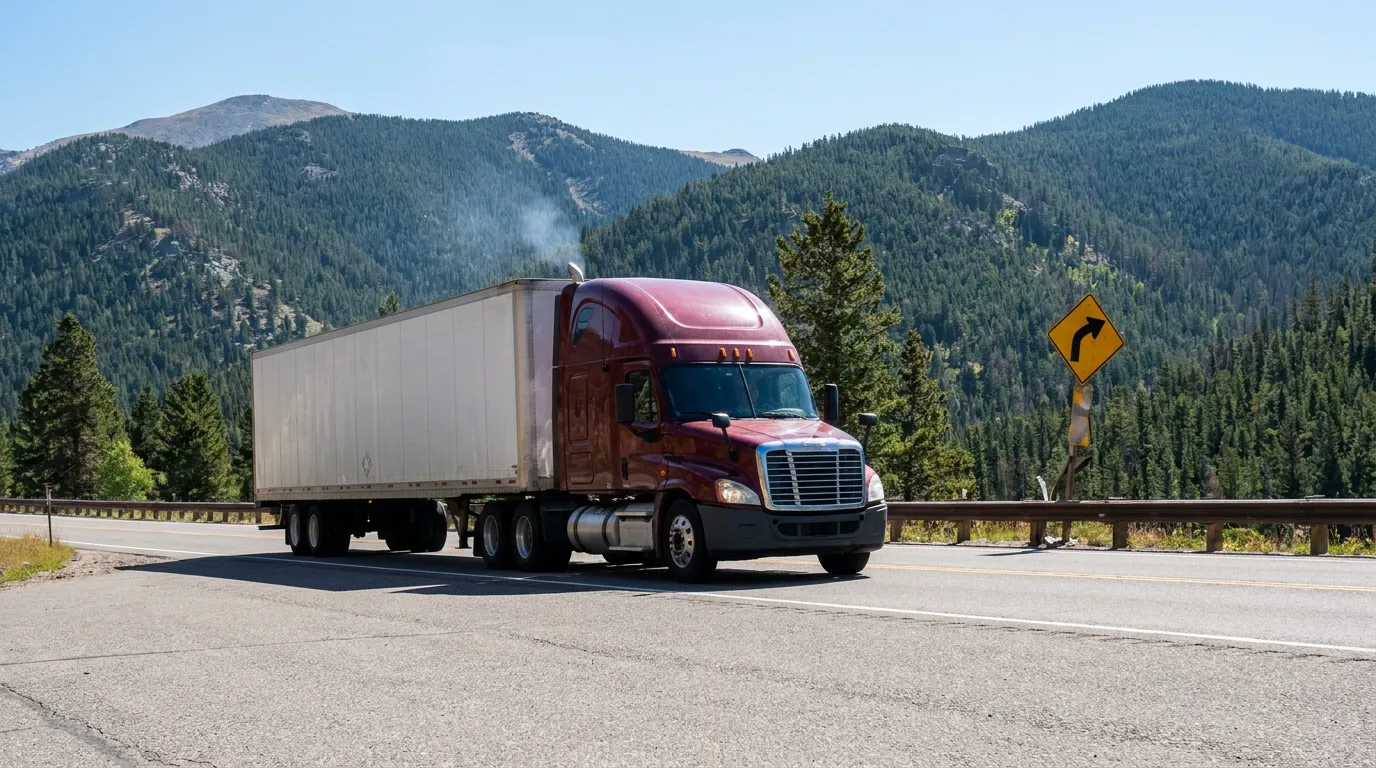
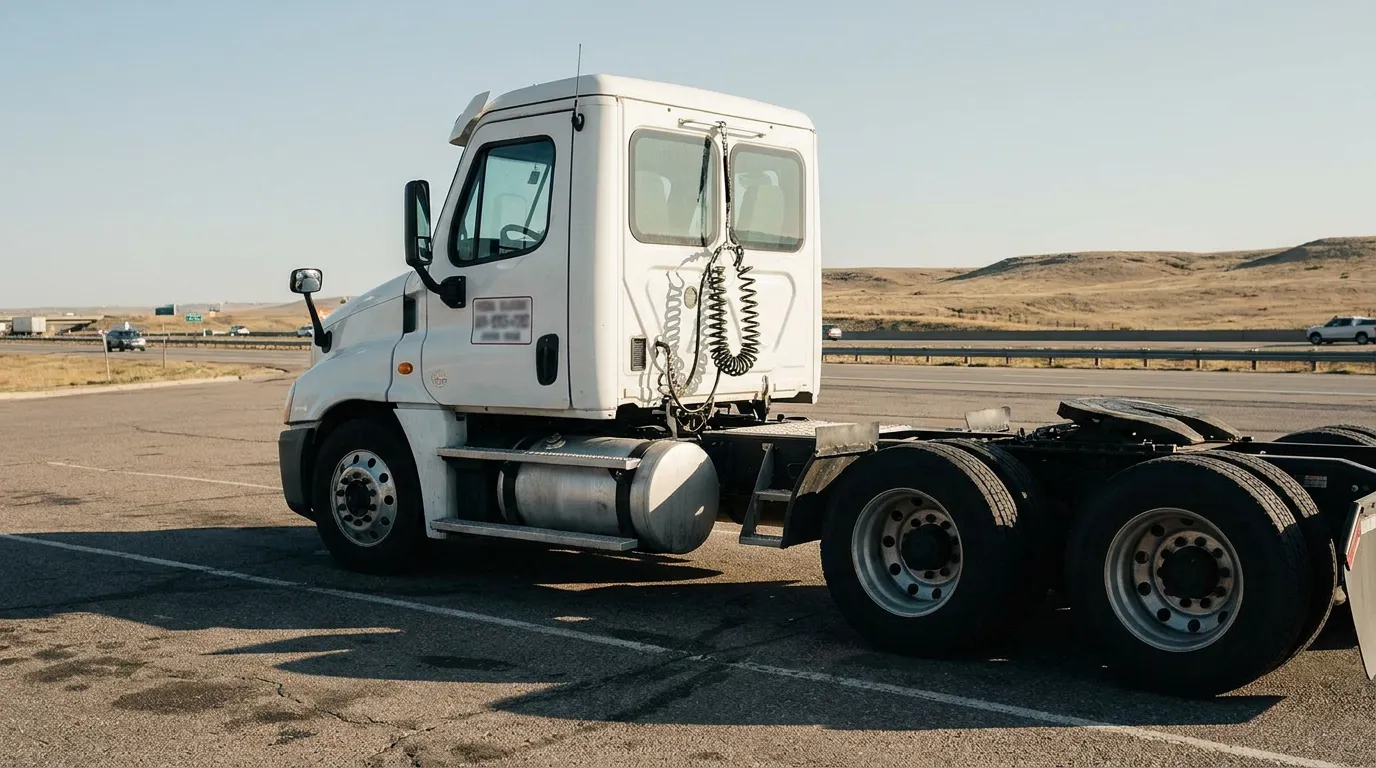
When Brakes Give Out on a Steep Colorado Grade
Key Takeaways: When a truck’s brakes fail on a Colorado mountain road, more than one party may be liable, including the driver, the motor carrier, a maintenance shop, a cargo loader, or a brake parts maker. C.R.S. § 42-4-223 sets brake performance standards and requires brakes to be kept in good working order. A violation may support a negligence claim. Under Colorado’s pro rata liability statute, each defendant usually pays only its own share of fault, and fault can be assigned to properly designated nonparties. Your own fault can lower your recovery, and you cannot recover if your fault equals or exceeds the defendants’ combined fault, which in practice means 50% or more. Key evidence such as maintenance logs, inspection reports, and black box data may be lost quickly, so a prompt preservation demand can help. Strict deadlines apply: generally three years for many motor vehicle injury claims, and possibly less for others, such as wrongful death and product liability claims.
Liability for a truck’s brake failure on a Colorado mountain road often falls on more than one party. The driver, the motor carrier, a maintenance shop, or a brake parts maker may each share the blame, depending on why the brakes failed. If you or a loved one was hurt in a runaway truck accident on I-70, U.S. 285, or another Front Range grade, learning who may be accountable can help you protect your claim.
Brake failure cases can turn on evidence that trucking companies control, and some of it can disappear quickly. Jacobs Law helps injured Coloradans in Centennial and across the state investigate commercial truck crashes and pursue the compensation the law allows. Call 303-529-4040 or contact us now to talk about your situation.
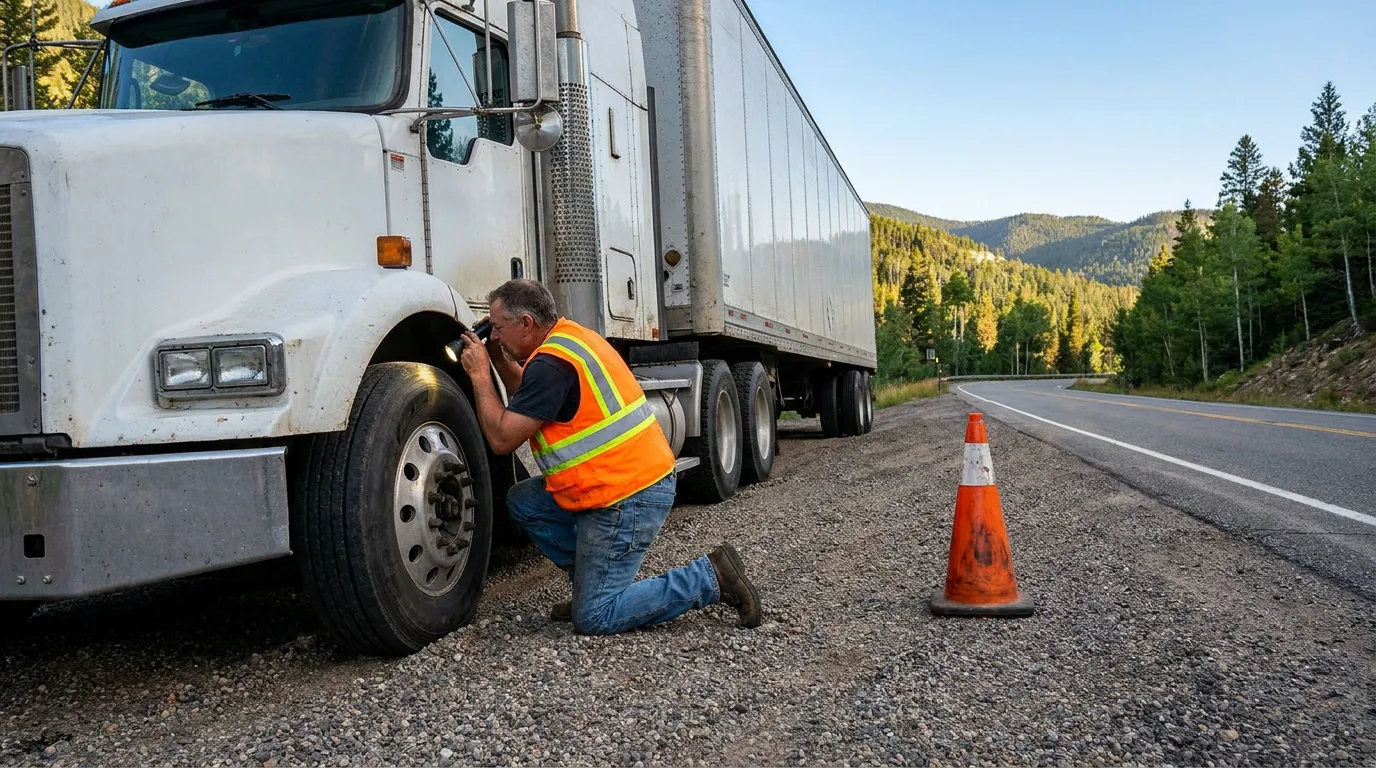
What Colorado Law Requires of Truck Brakes
Colorado sets specific brake standards for motor vehicles, and those standards often form the basis of a negligence claim. Under C.R.S. § 42-4-223(1)(a), every motor vehicle on a Colorado highway must have brakes that can control, stop, and hold it, plus two separate means of applying them. A truck that loses all braking on a descent may raise questions about whether it met this rule, though brake failure alone does not automatically prove negligence.
Stopping Distance and Load Weight
The statute sets a performance standard that applies whether a truck is empty or fully loaded. Under C.R.S. § 42-4-223(2)(a), service brakes generally must be able to stop a vehicle going 20 mph within 40 feet on a dry asphalt or concrete pavement surface free from loose material where the grade does not exceed one percent, meaning a hard, nearly level surface. This standard applies statewide in Colorado, including Centennial. If a carrier overloaded a trailer or ran brakes that could not handle the load, those facts may become central to fault.
Trailer Brakes and Breakaway Systems
Heavier trailers have their own brake rules. Under C.R.S. § 42-4-223(1)(c) and (1)(d)(III), trailers and semitrailers weighing 3,000 pounds or more generally must have brakes the driver can apply from the cab, and those brakes must apply automatically if the trailer breaks away. Subject to limited exceptions, they must also have brakes on all wheels.
The Duty to Maintain and Adjust Brakes
Colorado also requires that brakes stay in good working order. C.R.S. § 42-4-223(2)(e) requires all brakes to be kept in good working order and adjusted to work as evenly as possible on both sides of the vehicle. This duty may support negligence claims against truck owners, motor carriers, and maintenance shops. Brakes that are out of adjustment can overheat and fade on a long downgrade.
Who May Share Truck Brake Failure Liability
More than one party may be responsible when a truck’s brakes fail, depending on the facts. The table below lists parties often investigated in these cases.
| Potentially Liable Party | Possible Basis for Responsibility |
|---|---|
| Truck driver | Skipping pre-trip inspections, riding the brakes on descents, ignoring warning signs |
| Motor carrier / trucking company | Poor maintenance programs, overloading, pressuring drivers, unsafe equipment |
| Maintenance or repair shop | Faulty brake adjustment, improper repairs, missed defects |
| Brake or parts manufacturer | Defective design or manufacturing of brake parts |
| Cargo loader | Overweight or unbalanced loads that exceed brake capacity |
Carrier Duties Under State Safety Rules
Motor carriers in Colorado have state-enforced duties to inspect and maintain their equipment. Under C.R.S. § 42-4-235, the chief of the Colorado State Patrol must adopt rules for operating commercial vehicles. Those rules generally follow federal motor carrier safety rules on driver qualifications, hours of service, and vehicle inspection, repair, and maintenance. The Colorado Public Utilities Commission may enforce these rules against motor carriers. Those actions are separate from your injury lawsuit, but the records they produce may still be useful evidence.
Product Liability for Defective Brake Parts
A defective part may bring the manufacturer into the case alongside the trucking company. Colorado’s product liability laws, found at C.R.S. §§ 13-21-401 to 13-21-406, may apply when defective brake parts or design helped cause the failure. These laws include certain presumptions and defenses that may favor manufacturers. You can review these and related laws in Colorado’s Title 13 damages statutes. Preserving the failed parts may be critical.
💡 Pro Tip: Ask the trucking company and any tow yard in writing to keep the truck, its brake parts, and its electronic data intact. A prompt preservation letter can help keep evidence from being repaired, scrapped, or overwritten.
How Fault Is Divided in a Colorado Truck Accident Brake Failure Case
Colorado generally makes each defendant pay only for its own share of fault. Under C.R.S. § 13-21-111.5(1), each defendant’s liability is "several only and is not joint," and each is liable only for damages tied to its degree of fault. You can read the pro rata liability statute to see how this works. In practice, you may need to identify every responsible party, because one defendant generally will not cover another’s share. There is a narrow exception for defendants who knowingly conspire pursuing a common plan. Separately, an employer may be liable for its employee’s on-the-job negligence.
Fault may also be assigned to people or companies not named in the lawsuit. C.R.S. § 13-21-111.5(3)(b) allows fault to be assigned to nonparties. A defendant must designate a nonparty within 90 days after the case begins, unless the court allows otherwise, and must prove that nonparty’s fault. Any fault assigned to a nonparty could reduce what you recover from the named defendants. That is why a careful early investigation matters.
Your own conduct can also affect your recovery. Colorado follows a modified comparative negligence system under C.R.S. § 13-21-111. Your damages are reduced by your percentage of fault, and you cannot recover if your fault equals or exceeds the defendants’ combined fault, which in practice means 50% or more. Insurers sometimes argue that a victim was speeding or following too closely.
Evidence That Can Prove a Colorado Mountain Grade Truck Crash Claim
Records made before and after the crash often show why the brakes failed. Under C.R.S. § 42-4-235, commercial vehicle safety inspections generally must be done by officers certified by the Commercial Vehicle Safety Alliance to perform Level I inspections. Those inspection records and any out-of-service findings can be key evidence. Violating the brake statute is a class A traffic infraction under C.R.S. § 42-4-223(3), and a violation of a safety statute may support a negligence per se argument. However, Colorado law generally limits whether the ticket itself, or a related traffic conviction, can be used as evidence in a civil case.
Other evidence often sought in these cases includes:
- Driver inspection reports and vehicle maintenance logs
- Electronic control module or "black box" data showing speed and braking
- Hours-of-service and electronic logging device records
- Repair invoices and parts purchase records
- Witness statements and dashcam or roadside camera footage
- Medical records showing your injuries and treatment
Some of this evidence may be kept only for limited periods, which is why acting early can help. For example, carriers may keep driver vehicle inspection reports for as little as three months, and hours-of-service records for six months. Without a preservation demand, a carrier may lawfully discard certain documents after those periods end. Once a lawsuit is reasonably expected, however, parties generally have a duty to preserve relevant evidence.
Compensation and Deadlines After a Runaway Truck Accident
Victims may seek economic damages such as medical bills, rehab costs, and lost wages, along with noneconomic damages for pain and suffering. C.R.S. § 13-21-102.5 caps noneconomic damages in most personal injury cases, and claims arising on or after January 1, 2025, are generally subject to a higher cap than earlier claims. Economic losses are generally not capped, so documenting them fully is important.
Colorado sets filing deadlines, and courts generally enforce them strictly. Many motor vehicle injury claims fall under C.R.S. § 13-80-101(1)(n), which generally allows three years. Other claims, including wrongful death claims under C.R.S. § 13-80-102 and product liability claims under C.R.S. § 13-80-106, generally have two years. If a government vehicle or public road maintenance is involved, the Colorado Governmental Immunity Act generally requires written notice within 182 days of discovering the injury, and it also limits when and how much a public entity can be held liable.
💡 Pro Tip: Avoid giving a recorded statement to the trucking company’s insurer before you understand your rights. Insurers sometimes use early statements to argue that you share fault.
Frequently Asked Questions
1. Can I sue the trucking company if the driver caused the brake failure?
In many cases, yes. Carriers may be liable for their employee drivers’ conduct on the job, and for their own maintenance and supervision failures. Liability depends on the facts, including whether the driver is an employee.
2. What if a mechanic, not the trucking company, made the faulty repair?
The repair shop may be liable for negligent work. Under C.R.S. § 13-21-111.5(3)(b), fault may be assigned to a properly designated shop even if it is not named in the suit, so it is often important to include all responsible parties.
3. Does a brake citation prove the truck driver was at fault?
No, not automatically. Violating C.R.S. § 42-4-223 is a class A traffic infraction under subsection (3), and the violation may support a negligence per se argument. However, the ticket itself may have limited use as evidence in a civil case.
4. Will I recover less if I was partly at fault?
Possibly. Under C.R.S. § 13-21-111, your recovery is reduced by your share of fault, and it is barred if your fault equals or exceeds the defendants’ combined fault, which in practice means 50% or more.
5. How long do I have to file a claim?
Many motor vehicle injury claims in Colorado have a three-year deadline. Wrongful death and product liability claims generally have two years, and claims against government entities require notice within 182 days. A prompt review can help you avoid missing a deadline.
Holding Every Responsible Party Accountable
A brake failure on a mountain descent rarely has a single cause, and Colorado law reflects that. Identifying every responsible party early, preserving evidence, and documenting your losses can make a real difference. To learn more about related injury topics, visit our Colorado injury law articles.
If you are dealing with injuries after a runaway truck crash, you do not have to sort out these questions by yourself. A Colorado truck accident brake failure lawyer at Jacobs Law can review your case and explain your options. Call 303-529-4040 or schedule your consultation today.
Disclaimer: This content is for informational purposes only and is not legal advice. Every case is unique, and results may vary. Consult an attorney about your specific circumstances.