Winter Traction Rules on Colorado Highways and Why They Matter After a Crash
Key Takeaways: Colorado’s chain law, codified at C.R.S. § 42-4-106, authorizes CDOT to restrict highway travel in icy or snow-packed conditions unless vehicles carry chains or approved traction devices. Commercial trucks must chain at least four drive-wheel tires (two for buses). Violations are traffic infractions with enhanced fines if a highway is blocked. In truck crash claims, proof of an active traction law violation may support negligence per se arguments. Critical evidence including CDOT activation logs, State Patrol reports, and black-box data can disappear quickly, making early preservation essential. Colorado’s modified comparative negligence system under C.R.S. § 13-21-111 reduces recovery proportionally to your fault and bars recovery if your negligence equals or exceeds the defendant’s. Damages include economic, noneconomic, and physical impairment categories, with different rules for fatal cases and strict deadlines.
Colorado’s chain law under C.R.S. § 42-4-106 allows the state to restrict highway travel during icy or snow-packed conditions unless vehicles carry tire chains or approved alternate traction devices. Commercial trucks face stricter requirements than passenger cars, and violations are traffic infractions. When a semi jackknifes or slides through an intersection, evidence that the driver ignored an active traction law can become important proof of negligence.
If you were hurt in a Colorado chain law truck accident, the team at Jacobs Law can help you understand your options. Call 303-529-4040 or reach out to our team to discuss what happened and what evidence may still be preserved.
The Statute Behind Colorado’s Traction Law
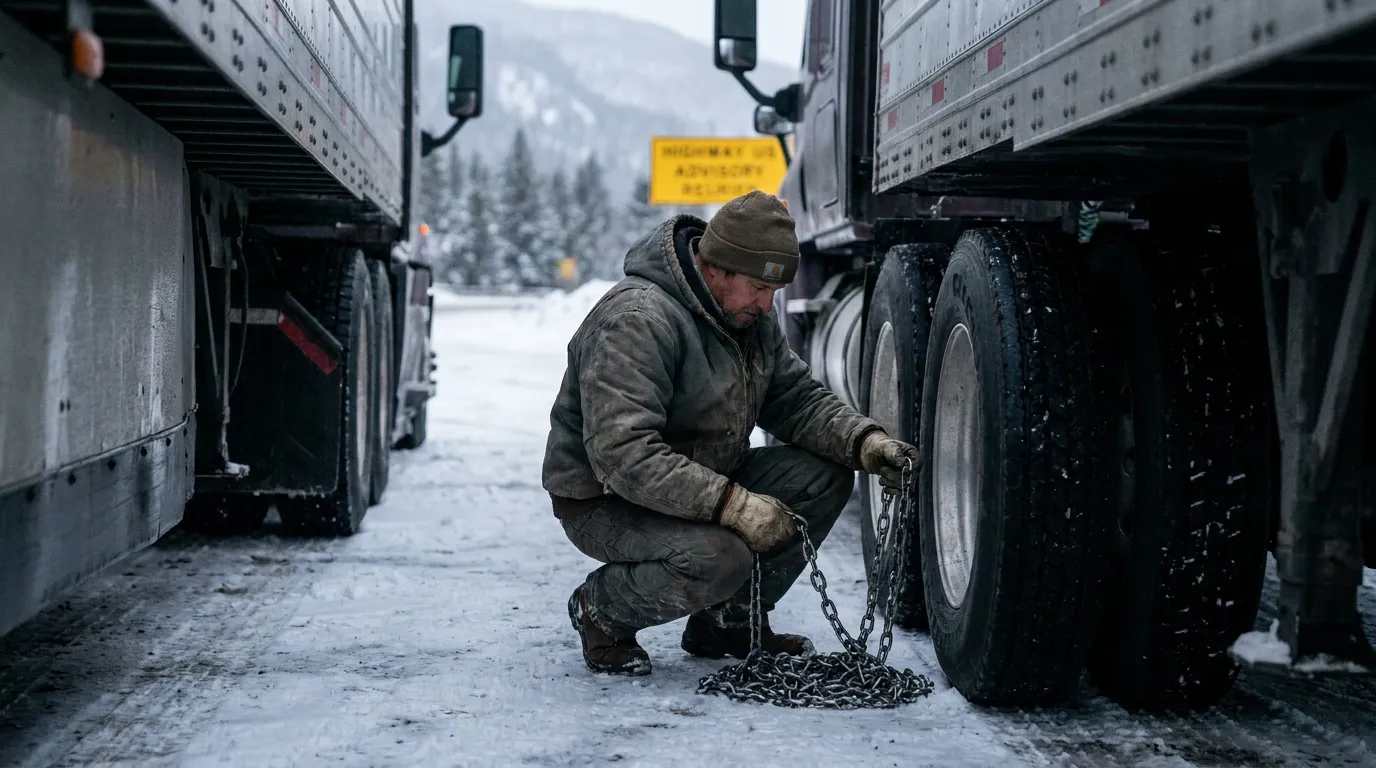
The operative provision is C.R.S. § 42-4-106, titled "Who may restrict right to use highways." The statute authorizes CDOT and local authorities to restrict highway use when icy or snow-packed conditions exist, unless vehicles are equipped with tire chains or alternate traction devices meeting statutory and CDOT standards. The current text in Title 42 of the Colorado Revised Statutes remains the authoritative source.
Notice matters as much as the restriction itself. Chain-law restrictions become enforceable once signs giving notice are erected, including temporary or electronic message signs. The Colorado State Patrol enforces these restrictions with CDOT, meaning trooper records, sign activation logs, and CDOT alerts may help establish that a trucker had notice of an active restriction.
Equipment Standards for Commercial Vehicles
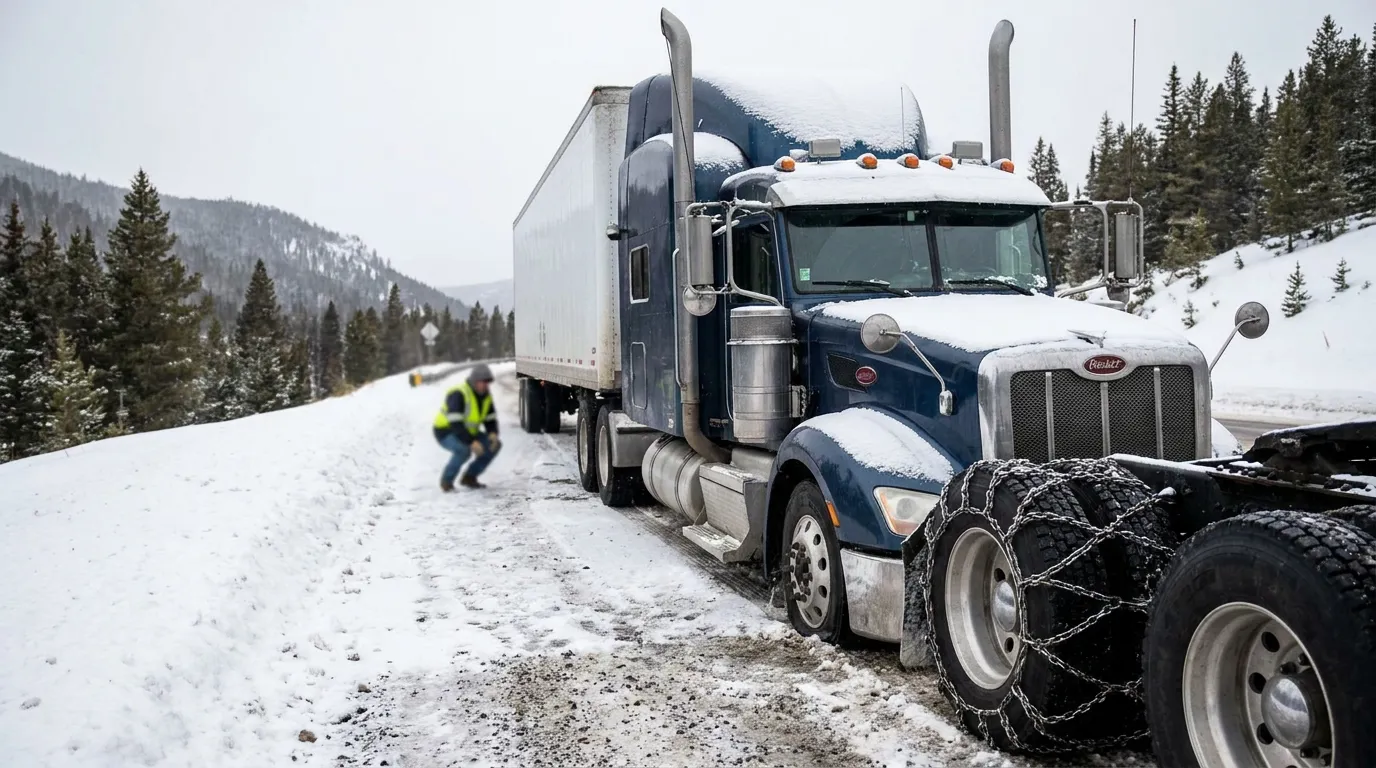
The statute sets specific equipment benchmarks for commercial vehicles. When the commercial traction restriction is in effect, drivers of commercial vehicles with four or more drive wheels must chain at least four drive-wheel tires, and bus drivers must chain at least two, subject to statutory and CDOT rule exceptions. These requirements provide a measurable standard for evaluating a trucking company’s conduct after a winter truck crash.
Penalties That Can Support a Civil Claim
A chain law violation is generally charged as a traffic infraction, with penalties set by C.R.S. § 42-4-1701. The statutory scheme provides for enhanced fines when a violation blocks or closes a highway. While a citation does not by itself decide a civil case, the underlying conduct may be significant evidence of negligence and may support a negligence per se theory.
| Issue | What the Statute Provides |
|---|---|
| Authority to restrict | CDOT may restrict highway use in icy or snow-packed conditions, C.R.S. § 42-4-106 |
| Commercial chaining | Generally at least four drive-wheel tires chained; buses at least two |
| When rules apply | Generally once notice signs, including temporary or electronic signs, are posted |
| Violation classification | Traffic infraction, with enhanced fines if a highway is blocked or closed |
How a Colorado Chain Law Truck Accident Becomes a Negligence Case
Statutory violations are commonly framed as negligence per se within Colorado’s fault analysis. An unexcused violation of a safety statute may establish the duty and breach elements of a negligence claim, provided the injured person is within the class the statute protects and the harm is the type the statute was designed to prevent. The plaintiff must still prove causation and damages, and defendants may assert comparative negligence and other defenses.
Proving the violation requires evidence that can disappear quickly. Useful materials include:
- CDOT restriction activation records and variable message sign histories
- Colorado State Patrol reports, citations, and dashcam or bodycam footage
- Carrier dispatch communications, driver logs, and hours-of-service data
- Electronic control module or black-box data showing speed and braking
- Maintenance and inspection records for tires, brakes, and chain equipment
Carriers are generally required to keep many records only for limited retention periods set by federal regulation. A prompt preservation letter may help protect data that would otherwise be lawfully discarded or overwritten. Our discussion of how winter weather affects truck cases walks through practical evidence issues in more detail.
💡 Pro Tip: Photograph the truck’s drive wheels if you safely can. Images showing bare tires during an active traction law may be difficult for a carrier to explain later.
Comparative Fault and the Insurer’s Favorite Argument
Colorado follows a modified comparative negligence system. Under C.R.S. § 13-21-111, contributory negligence does not bar recovery "if such negligence was not as great as the negligence of the person against whom recovery is sought," and damages are "diminished in proportion to the amount of negligence attributable" to the injured party. A plaintiff found 50 percent or more at fault relative to the defendant generally recovers nothing. Insurers often use this mechanism to discount truck crash claims, arguing the injured driver was speeding, following too closely, or driving on unsafe tires.
Allocation Among Multiple Parties
Fault in trucking cases is rarely limited to two people. Colorado applies C.R.S. § 13-21-111 and the pro rata liability statute, C.R.S. § 13-21-111.5, which generally makes defendants severally liable for their own percentage of fault and allows fault to be allocated to properly and timely designated nonparties. In a chain law truck crash, that could include the driver, the motor carrier, a maintenance contractor, or a shipper who pressured an unrealistic delivery schedule. Vicarious liability for an employee driver acting within the scope of employment can still place a carrier on the hook for the driver’s share.
What Damages a Truck Crash Claim Can Potentially Recover
The injured plaintiff generally carries the burden of proving damages by a preponderance of the evidence. Colorado’s pattern instruction for personal injuries to adults, CJI-Civ 6:1, directs the jury to determine a total dollar amount of damages caused by the defendant’s negligence. The instructions in Chapter 6 of the Colorado jury instructions on damages cover personal injury damages for adults and minors, loss of consortium, and property loss through separate numbered instructions.
Damages generally fall into recognized categories. Noneconomic losses may include pain and suffering, inconvenience, emotional stress, and impairment of quality of life. Economic losses may include lost earnings, lost earning capacity, and medical expenses. Physical impairment and disfigurement are treated as a separate category, which matters because the statutory cap on noneconomic loss under C.R.S. § 13-21-102.5 generally does not apply to physical impairment or disfigurement awards.
Juries may be asked to separate these amounts through special interrogatories. Instructions 6:1A and 6:1B provide interrogatory forms allocating economic losses, noneconomic losses, and physical impairment or disfigurement.
💡 Pro Tip: Keep a dated symptom and mileage journal. Contemporaneous notes often support noneconomic loss testimony far better than memory does months later.
When a Chain Law Crash Turns Fatal
The damages framework changes in fatal cases. Colorado’s pattern instructions direct that in wrongful death actions, Instructions 10:3 and 10:4 should be used rather than Instructions 6:1, 6:1A, and 6:1B. Wrongful death claims have their own standing rules, deadlines, damages limitations, and categories of potentially recoverable loss.
Families often face procedural questions before substantive ones. Who may bring the claim, and when, depends on the statutory scheme and the relationship to the decedent.
Deadlines and Why They Deserve Early Attention
Colorado civil claims are subject to statutes of limitations. Claims arising from the use or operation of a motor vehicle are generally subject to a three-year limitations period, while many other negligence claims are subject to two years. Exceptions such as tolling or discovery-based accrual exist, but courts generally interpret them narrowly.
Administrative deadlines are separate from civil lawsuit deadlines. If a government entity is potentially involved, the Colorado Governmental Immunity Act generally requires written notice within a short statutory period, and failure to comply can bar the claim entirely. A colorado chain law truck accident lawyer can help identify which deadlines may apply to your situation.
Frequently Asked Questions
1. Does a chain law citation automatically mean the trucker is liable?
No. A citation under C.R.S. § 42-4-106 is an accusation, not a finding of civil liability. If a violation is proven, it may support negligence per se as to duty and breach, but a court or jury would still evaluate causation and damages, and the defense may raise comparative negligence.
2. Can I still recover if I was partly at fault?
In many cases, yes. Under Colorado’s modified comparative negligence statute, recovery is generally barred only if your negligence is as great as that of the person from whom you seek recovery. Otherwise, damages are reduced proportionally.
3. What if the traction law signs were not posted?
That can matter significantly. Chain-law restrictions generally become effective once signs are erected. If no notice was posted, proving a statutory violation may be difficult, though ordinary negligence theories such as driving too fast for conditions may still apply.
4. Do commercial vehicle chain requirements differ from passenger car rules?
Yes. The statute and CDOT rules impose distinct standards on commercial vehicles, including chaining at least four drive-wheel tires for vehicles with four or more drive wheels and at least two for buses when the commercial restriction is in effect.
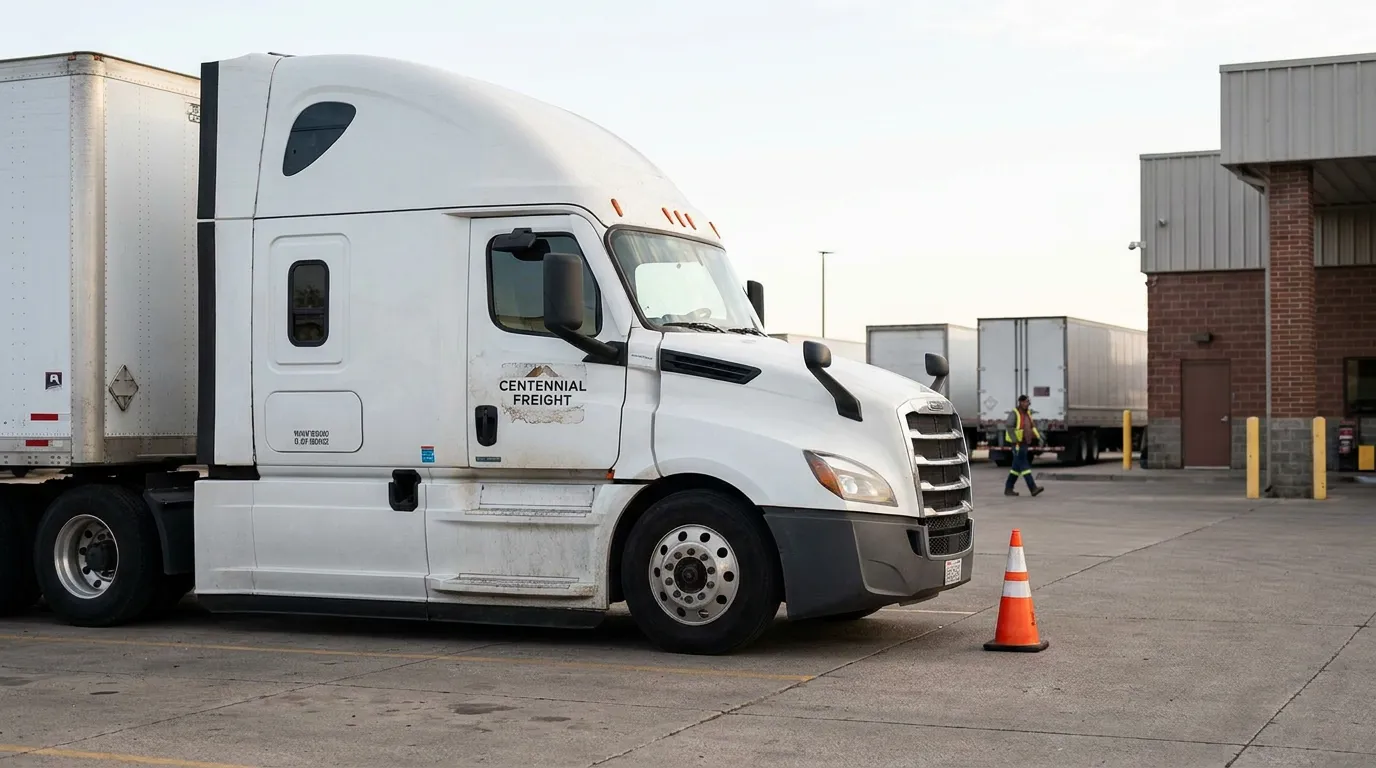
5. How quickly should I contact a Centennial truck accident attorney?
As soon as practical. Black-box data, dispatch records, and CDOT sign logs may be overwritten or discarded over time, and preservation demands are often most effective when sent early.
Bringing the Pieces Together After a Winter Truck Crash
Colorado’s traction law gives injured people a concrete, statutory benchmark for measuring a trucking company’s conduct during hazardous conditions. When commercial vehicle chains were required and not used, that fact may support a negligence argument, though it must still be tied to causation and proven damages under Colorado’s comparative fault framework.
If a truck crash in Centennial or anywhere along Colorado’s mountain corridors has left you injured, Jacobs Law is prepared to review what happened. Call 303-529-4040 or schedule a consultation today to discuss your claim.
Disclaimer: This content is for informational purposes only and is not legal advice. Every case is unique, and results may vary. Consult an attorney about your specific circumstances.